- WhatsApp Group Message History allows new members to view recent messages after joining a group chat.
- Users can choose to share between 25 and 100 recent messages to provide context.
- The feature remains protected by end-to-end encryption, ensuring privacy.
WhatsApp has started rolling out WhatsApp Group Message History, a new feature that allows recent messages to be shared with people when they join a group chat. The update is supposed to help new members quickly understand ongoing conversations without interrupting others in the group.
The company said the feature is one of the most requested improvements for group chats and will be available across devices as the rollout continues.
How WhatsApp Group Message History works
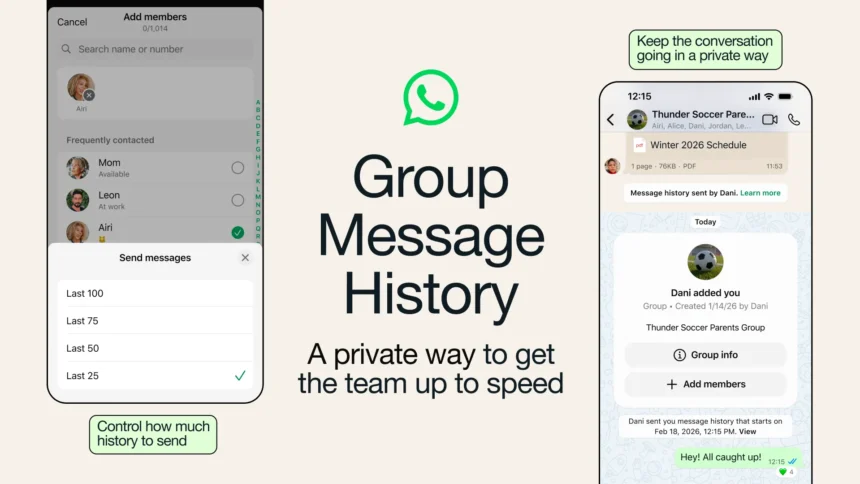
When someone is added to a group, the person adding them will now see an option to send recent messages. Users can choose to share between 25 and 100 of the latest messages so the new member can catch up on what has already been discussed.
The shared messages appear inside the chat and are clearly marked as message history. Everyone in the group is notified when the history is sent. The messages also show the original sender’s name and the time they were sent.
Sending message history is not automatic. It only happens if a group member or admin chooses to share it. Group admins can also turn off the feature for their groups, although they will still be able to share message history themselves if needed.

Privacy and security
WhatsApp confirmed that WhatsApp Group Message History is protected by end-to-end encryption. This means only people in the group can read the messages. Like other chats on WhatsApp, the company itself cannot access the content.
The feature removes the need to forward multiple messages or share screenshots when someone new joins. Instead, everything stays inside the chat in a clear and organized way.
Gradual rollout across devices
WhatsApp said the feature is being rolled out gradually, so it may not be available to all users at the same time. Updates like this are usually released in stages across different regions and devices.