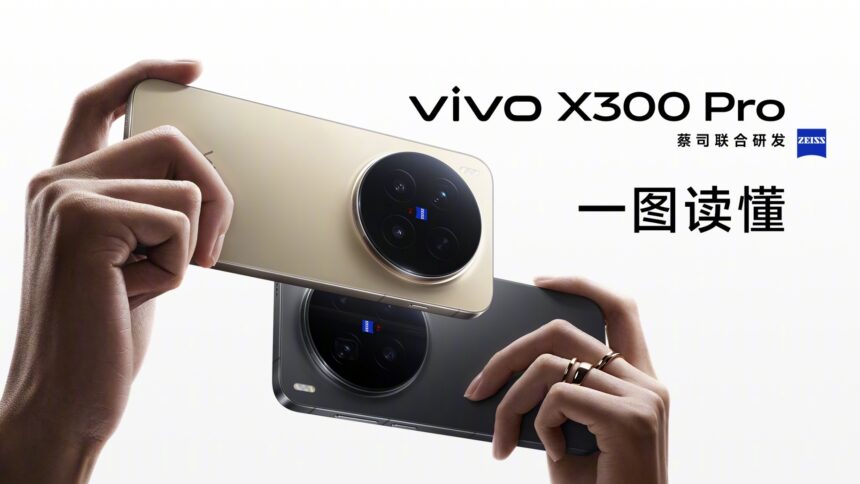
vivo X300 series launched in China with 200MP cameras, Dimensity 9500 chipset, and up to 6510mAh battery

Akarsh Rasik
5 Min Read
Highlights
  • The vivo X300 features a 6.31-inch LTPO AMOLED display, while the X300 Pro comes with a 6.78-inch 1.5K LTPO AMOLED screen. both offering up to 120Hz refresh rate, HDR10+ support, and peak brightness of 4500 nits.
  • Both models are powered by MediaTek’s latest 3nm Dimensity 9500 processor, paired with up to 16GB LPDDR5X RAM and 1TB UFS 4.1 storage, delivering flagship-grade performance and efficiency.
  • The X300 and X300 Pro boast high-end multi-camera setups featuring up to 200MP sensors, Zeiss T* coating, and vivo’s V3+ imaging chip (Pro model adds VS1), enabling advanced zoom, telemacro, and natural color accuracy.

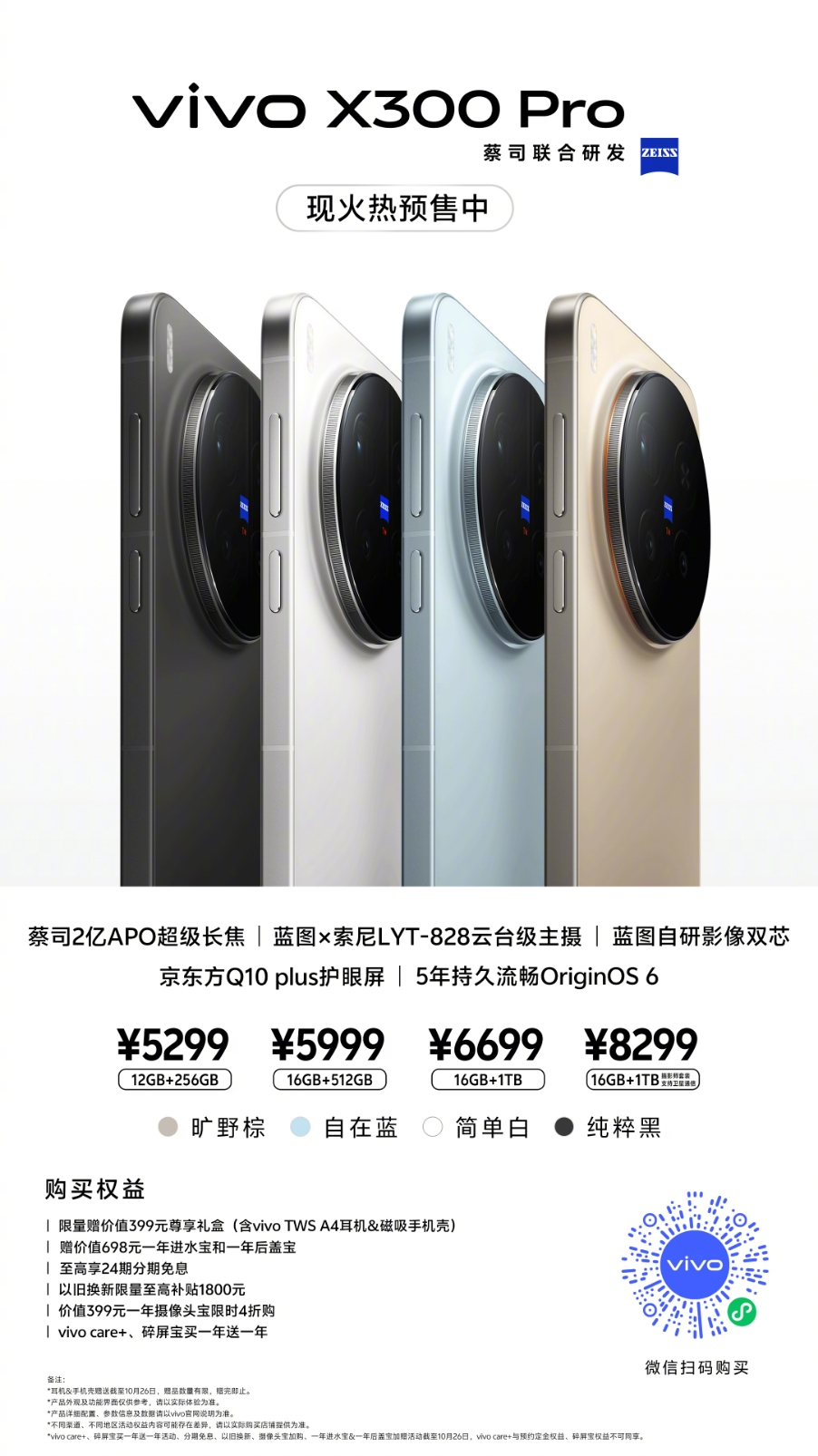
vivo has officially launched its X300 series, which includes the vivo X300 and vivo X300 Pro, at a China event. As expected, the phones are a major improvement over the previous model, featuring a top-quality display, a new flagship processor, and better camera capabilities. The vivo X300 series launched positions itself as a strong contender in the premium smartphone segment.

Display and design

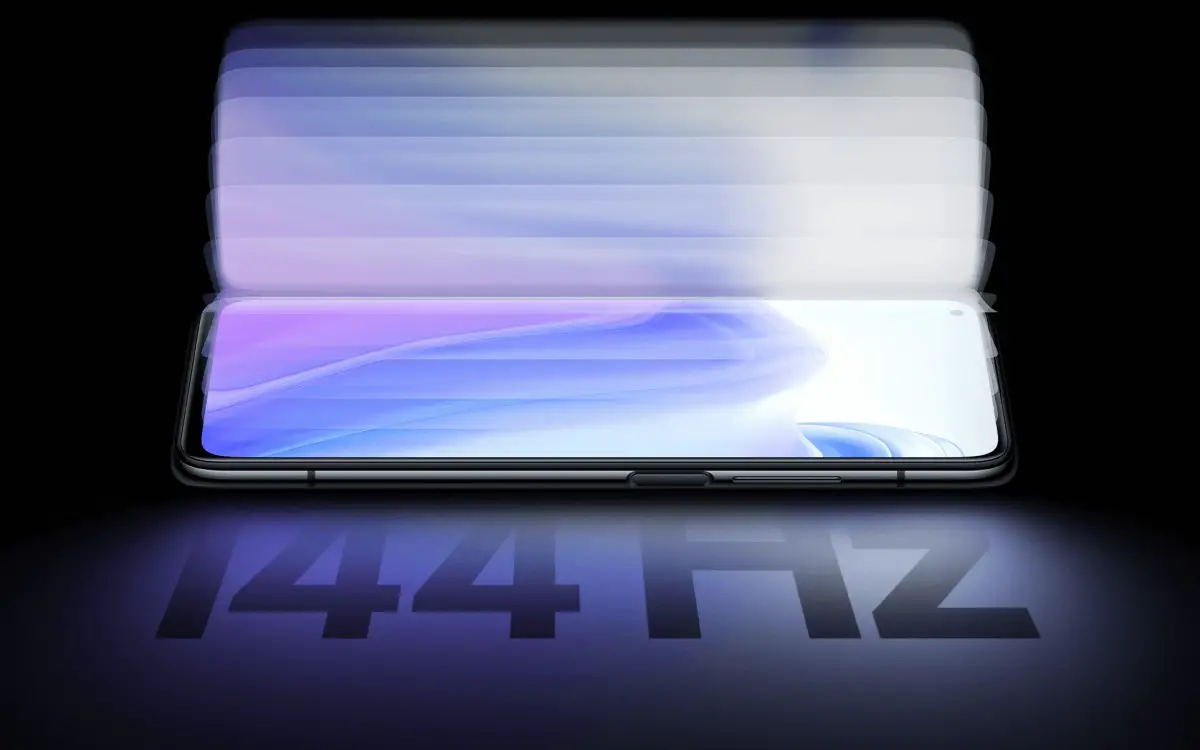
The vivo X300 series debuts with two different screen sizes. The standard vivo X300 has a 6.31-inch screen, and the X300 Pro has a larger 6.78-inch screen, both featuring 1.5K LTPO AMOLED displays. Both screens offer an adaptive refresh rate of 1–120Hz, support for HDR10+, and a peak brightness of up to 4,500 nits.

The display panels use BOE Q10+ material and include DC dimming and 2160Hz PWM dimming for comfortable viewing, along with Zeiss natural color management for very accurate colors. vivo has also improved the design by using ultra-narrow bezels (1.05mm on the X300 and 1.1mm on the X300 Pro).

Performance and software

Under the hood, both models run on the MediaTek Dimensity 9500 SoC, which is built using a 3nm process and includes the Arm Mali-G1 Ultra MC12 GPU. According to vivo, the chipset achieved over 4 million points on the AnTuTu 11 benchmark.

The phones come with up to 16GB LPDDR5X RAM and 1TB UFS 4.1 storage, which helps with very fast multitasking and quick app loading. Both devices use Origin OS 6, which is based on Android 16, providing a better user interface and improved privacy features.

Camera system with Zeiss collaboration

Imaging remains a major highlight of the vivo X300 series.

  • The vivo X300 features a 200MP Samsung HPB main camera, a 50MP ultra-wide lens, and a 50MP Sony LYT602 periscope telephoto lens with 3x optical zoom and telemacro support.
  • The vivo X300 Pro upgrades to a 50MP Sony LYT828 primary sensor, accompanied by a 50MP ultra-wide lens and a 200MP Samsung HPB periscope telephoto camera with 3.7x optical zoom.

Both phones include Zeiss T coating, APO-certified optics, and the V3+ imaging chip. The X300 Pro adds a VS1 chip for better computational photography (image processing). A 50MP front-facing camera is standard on both models for high-quality selfies and video calls.

The partnership with Zeiss also covers software features like Zeiss 2.35x teleconverter support and natural color processing for detailed and realistic images in all lighting conditions.

Battery and charging

Vivo has equipped the X300 a 6,040mAh battery and the X300 Pro a 6,510mAh battery. Both phones support fast charging with 90W wired charging and 40W wireless charging. They also feature reverse wireless charging, which lets users charge accessories from the phone.

Build and connectivity

Both smartphones have IP68 and IP69 ratings for water and dust resistance, making them more durable. The devices also feature stereo speakers, Hi-Fi audio, infrared (IR) sensors, and in-display ultrasonic fingerprint scanners. For connectivity, both phones support 5G SA/NSA, Wi-Fi 7, Bluetooth 5.4, GPS, NFC, and the latest USB Type-C 3.2 Gen1 port.


Pricing and availability

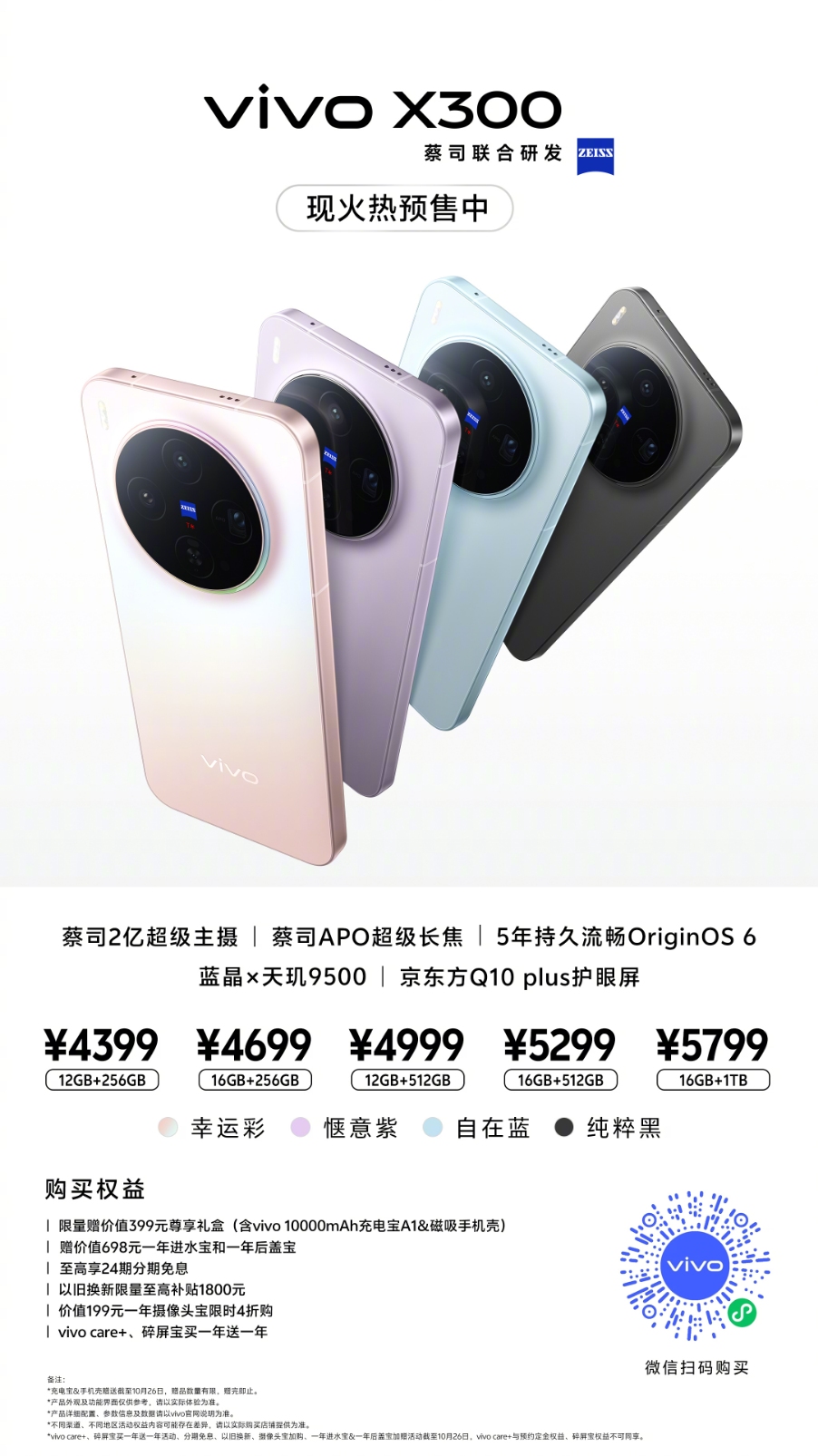
The vivo X300 series launched in several configurations in China, with the following prices:

vivo X300:

  • 12GB + 256GB — ¥4,399 (≈ USD 618 / ₹54,800)
  • 16GB + 256GB — ¥4,699 (≈ USD 660 / ₹58,540)
  • 12GB + 512GB — ¥4,999 (≈ USD 702 / ₹62,280)
  • 16GB + 512GB — ¥5,299 (≈ USD 744 / ₹66,015)
  • 16GB + 1TB — ¥5,799 (≈ USD 815 / ₹72,240)

vivo X300 Pro:

  • 12GB + 256GB — ¥5,299 (≈ USD 744 / ₹66,015)
  • 16GB + 512GB — ¥5,999 (≈ USD 843 / ₹74,750)
  • 16GB + 1TB — ¥6,699 (≈ USD 941 / ₹83,475)
  • 16GB + 1TB Satellite Edition + Photography Kit — ¥8,299 (≈ USD 1,166 / ₹1,03,420)

The devices are currently available for pre-order and will officially go on sale in China from October 17, 2025.

Share This Article
Follow:
Writing about emerging gadgets and technology news, as well as keeping you updated on movie and music news, with a focus on all things K-pop.
Highlights
  • The vivo X300 features a 6.31-inch LTPO AMOLED display, while the X300 Pro comes with a 6.78-inch 1.5K LTPO AMOLED screen. both offering up to 120Hz refresh rate, HDR10+ support, and peak brightness of 4500 nits.
  • Both models are powered by MediaTek’s latest 3nm Dimensity 9500 processor, paired with up to 16GB LPDDR5X RAM and 1TB UFS 4.1 storage, delivering flagship-grade performance and efficiency.
  • The X300 and X300 Pro boast high-end multi-camera setups featuring up to 200MP sensors, Zeiss T* coating, and vivo’s V3+ imaging chip (Pro model adds VS1), enabling advanced zoom, telemacro, and natural color accuracy.

vivo has officially launched its X300 series, which includes the vivo X300 and vivo X300 Pro, at a China event. As expected, the phones are a major improvement over the previous model, featuring a top-quality display, a new flagship processor, and better camera capabilities. The vivo X300 series launched positions itself as a strong contender in the premium smartphone segment.

Display and design

The vivo X300 series debuts with two different screen sizes. The standard vivo X300 has a 6.31-inch screen, and the X300 Pro has a larger 6.78-inch screen, both featuring 1.5K LTPO AMOLED displays. Both screens offer an adaptive refresh rate of 1–120Hz, support for HDR10+, and a peak brightness of up to 4,500 nits.

The display panels use BOE Q10+ material and include DC dimming and 2160Hz PWM dimming for comfortable viewing, along with Zeiss natural color management for very accurate colors. vivo has also improved the design by using ultra-narrow bezels (1.05mm on the X300 and 1.1mm on the X300 Pro).

Performance and software

Under the hood, both models run on the MediaTek Dimensity 9500 SoC, which is built using a 3nm process and includes the Arm Mali-G1 Ultra MC12 GPU. According to vivo, the chipset achieved over 4 million points on the AnTuTu 11 benchmark.

The phones come with up to 16GB LPDDR5X RAM and 1TB UFS 4.1 storage, which helps with very fast multitasking and quick app loading. Both devices use Origin OS 6, which is based on Android 16, providing a better user interface and improved privacy features.

Camera system with Zeiss collaboration

Imaging remains a major highlight of the vivo X300 series.

  • The vivo X300 features a 200MP Samsung HPB main camera, a 50MP ultra-wide lens, and a 50MP Sony LYT602 periscope telephoto lens with 3x optical zoom and telemacro support.
  • The vivo X300 Pro upgrades to a 50MP Sony LYT828 primary sensor, accompanied by a 50MP ultra-wide lens and a 200MP Samsung HPB periscope telephoto camera with 3.7x optical zoom.

Both phones include Zeiss T coating, APO-certified optics, and the V3+ imaging chip. The X300 Pro adds a VS1 chip for better computational photography (image processing). A 50MP front-facing camera is standard on both models for high-quality selfies and video calls.

The partnership with Zeiss also covers software features like Zeiss 2.35x teleconverter support and natural color processing for detailed and realistic images in all lighting conditions.

Battery and charging

Vivo has equipped the X300 a 6,040mAh battery and the X300 Pro a 6,510mAh battery. Both phones support fast charging with 90W wired charging and 40W wireless charging. They also feature reverse wireless charging, which lets users charge accessories from the phone.

Build and connectivity

Both smartphones have IP68 and IP69 ratings for water and dust resistance, making them more durable. The devices also feature stereo speakers, Hi-Fi audio, infrared (IR) sensors, and in-display ultrasonic fingerprint scanners. For connectivity, both phones support 5G SA/NSA, Wi-Fi 7, Bluetooth 5.4, GPS, NFC, and the latest USB Type-C 3.2 Gen1 port.

Pricing and availability

The vivo X300 series launched in several configurations in China, with the following prices:

vivo X300:

  • 12GB + 256GB — ¥4,399 (≈ USD 618 / ₹54,800)
  • 16GB + 256GB — ¥4,699 (≈ USD 660 / ₹58,540)
  • 12GB + 512GB — ¥4,999 (≈ USD 702 / ₹62,280)
  • 16GB + 512GB — ¥5,299 (≈ USD 744 / ₹66,015)
  • 16GB + 1TB — ¥5,799 (≈ USD 815 / ₹72,240)

vivo X300 Pro:

  • 12GB + 256GB — ¥5,299 (≈ USD 744 / ₹66,015)
  • 16GB + 512GB — ¥5,999 (≈ USD 843 / ₹74,750)
  • 16GB + 1TB — ¥6,699 (≈ USD 941 / ₹83,475)
  • 16GB + 1TB Satellite Edition + Photography Kit — ¥8,299 (≈ USD 1,166 / ₹1,03,420)
The devices are currently available for pre-order and will officially go on sale in China from October 17, 2025.


Share This Article
Follow:
Writing about emerging gadgets and technology news, as well as keeping you updated on movie and music news, with a focus on all things K-pop.