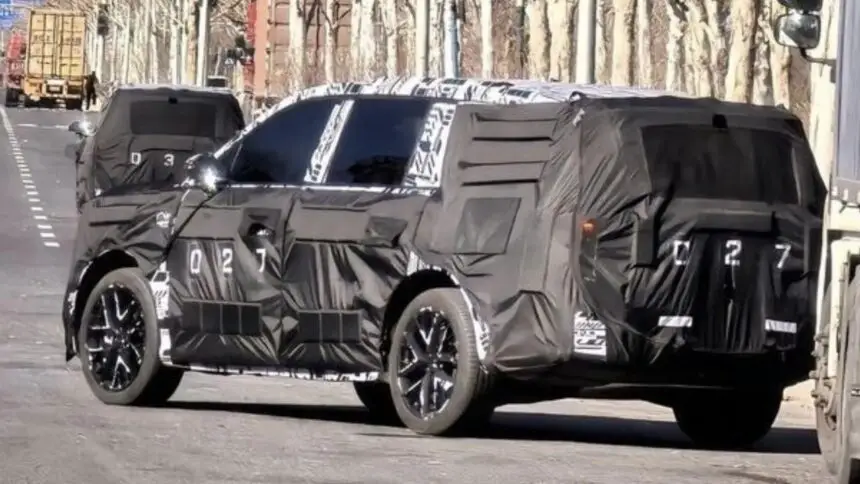
- The Xiaomi YU9 prototype has been spotted undergoing high-altitude testing above 4,000 meters in China’s Tianshan mountains, marking a crucial phase in its development.
- Xiaomi plans to offer the YU9 in two variants, a Pure EV and an EREV, with the range-extender model expected to deliver around 400 km of electric range and a total range of up to 1,500 km.
- With testing already in advanced stages, the full-size SUV, stretching over 5.2 meters, is rumored to debut in early 2026, highlighting Xiaomi’s growing presence in the global EV market.
The Xiaomi YU9 prototype has been spotted undergoing serious testing in the Tianshan mountain range, signaling the company’s next major move in the electric vehicle market. Photos shared by CEO Lei Jun show the large SUV heavily camouflaged as it tackles rough, high-altitude mountain roads.
This latest round of testing marks a significant milestone for Xiaomi, coming soon after the launch of its first batch of electric cars, and suggests that the company is preparing to enter the full-size SUV segment with a powerful new contender.
Xiaomi YU9 prototype spotted undergoing high-altitude testing in China
High-altitude testing above 4,000 meters
The tests are happening at more than 4,000 meters above sea level, which is not a regular road test. It’s to check how the vehicle performs under low oxygen and extreme cold. For electric and hybrid systems, this is a tough challenge, especially for the battery cooling, thermal management, and power delivery systems. The engineers are testing how stable the SUV remains when pushed under these conditions.
The prototype has been on the road since mid-summer, which means development is already in its later stages. This shows Xiaomi’s pace is quite fast for an automaker that only recently entered this industry.
A large full-size SUV
Even though the Xiaomi YU9 prototype is still covered up, its size is very clear in the photos. Reports suggest the SUV could be over 5.2 meters long and around 1.8 meters tall, putting it in the same category as other big family SUVs in the market. Based on its proportions, it’s clearly not meant to be a compact or mid-size car.
The target seems to be the premium large SUV market, likely competing with vehicles like Li Auto L9 and Aito M9. The stance looks wide and strong, giving a hint that Xiaomi is aiming for something luxurious but still practical.
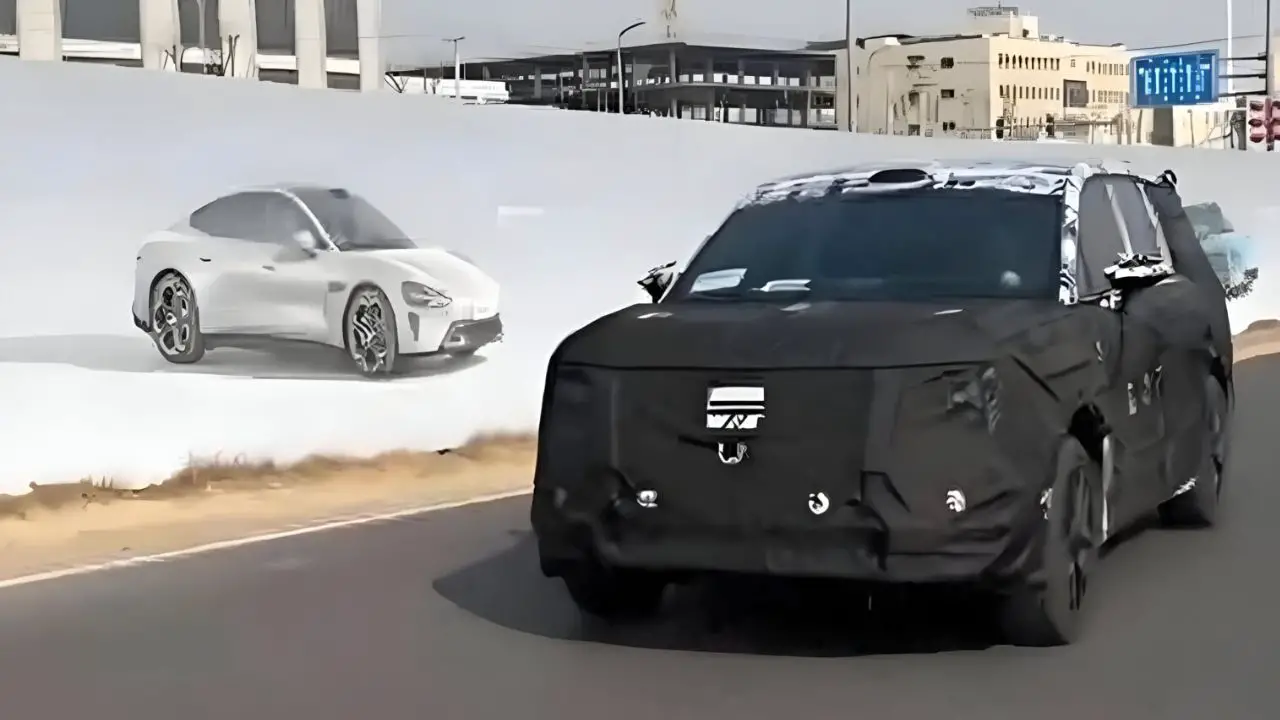
Dual powertrain setup
According to sources, Xiaomi plans to launch the YU9 in two versions. One will be a Pure EV, and the other will be an EREV (Extended-Range Electric Vehicle).
In the EREV setup, a small 1.5-liter turbocharged petrol engine acts only as a generator. It doesn’t drive the wheels directly; it just helps charge the battery while driving. The wheels are powered only by electric motors.

Reports say the EREV version will have an 80 kWh battery pack, allowing it to go around 400 km on electric power alone, which is quite good for such a large SUV. With the help of the generator, the total driving range could reach up to 1,500 km, depending on driving conditions. The combined power output is rumored to be around 400 horsepower.
This dual setup shows Xiaomi’s focus on giving customers both a pure electric choice and an option that removes range anxiety.
Possible launch and outlook
Since the Xiaomi YU9 prototype is already being tested publicly, many analysts expect a 2026 launch window. Xiaomi hasn’t yet confirmed the final name, specs, or release date. But based on how fast the development is going, it seems like they are pushing hard to get it ready soon.
The YU9 could become a key model in Xiaomi’s EV lineup, possibly their biggest vehicle yet. It’s expected to offer premium features, long range, and strong performance, helping Xiaomi build a stronger position in the global EV market.

Overall, the Xiaomi YU9 prototype represents a serious step forward for the company. From high-altitude tests to the dual powertrain plan, Xiaomi is clearly not treating this project lightly. If all goes as expected, this SUV could compete strongly in the high-end segment and mark a significant milestone in Xiaomi’s transition from phones to cars.