- Samsung is gearing up to dominate the Galaxy S27 Series with Exynos 2700 SoC chipsets in 2027.
- Current Galaxy S26 lineup has 25% of Exynos 2600-powered devices while the rest is taken over by Snapdragon 8 Elite Gen5.
- With Exynos 2700 SoC fabbed on a second-gen 2nm process and with undisputedly rocking performance on Geekbench, it will rival against Snapdragon 8 Elite Gen6 SoC.
Estimates suggest the Exynos 2600 SoC had a share of 25% across the entire Samsung S26 series, relinquishing the rest to Snapdragon 8 Elite Gen 5. However, things are steaming up with the Exynos 2700 SoC, as the chipset will reportedly take a lion’s share across the Galaxy S27 series next year.
Exynos 2700 SoC will dominate the Galaxy S27 series next year
Samsung has opted for a dual chipset strategy for its Galaxy S26 series, expected to launch in a few days. This is where the Exynos 2600 and Qualcomm’s Snapdragon 8 Elite Gen 5 will share the strategy, with the latter taking a lion’s share of 75% of the total devices. However, things may look different as we gear up for the Galaxy S27 series launch in February 2027, as Samsung will increase its share to 50%—aka double that of this year’s S26 series.

Park Yu-ak, an analyst at Kiwoon Securities, reported to the Korea Economic Daily on just how Samsung will be able to push its upcoming Exynos 2700 SoC on the unreleased S27 series. Apparently, the mass production for the Exynos 2700 SoC is set to start in the second half of this year, and the South Korean giant wants to reduce Snapdragon’s dominance on its prime Galaxy S series.
This is where the Exynos 2700 SoC fabbed on a next-gen 2nm GAA process comes into play. Sure, Samsung has reached a yield rate of 50% (70 and above is better as per TSMC); however, the tech juggernaut is securing a growth of 130% in chip orders, meaning it could make a lower yield profitable by selling more chips.

Exynos 2700 SoC is the epitome of lithography
The Exynos 2700 SoC will be fabbed on Samsung’s second-gen 2nm SF2P process. The chipset has leaked a few times when testing, revealing a lot of what it carries. For instance, it has ARM-based cores clocked at a whopping 4.20GHz, paired with LPDDR6 RAM at up to 14.4Gbps speeds, UFS 5.0, and a Unified Heat Path Block (HPB) that helps dissipate heat from the chipset faster than ever.
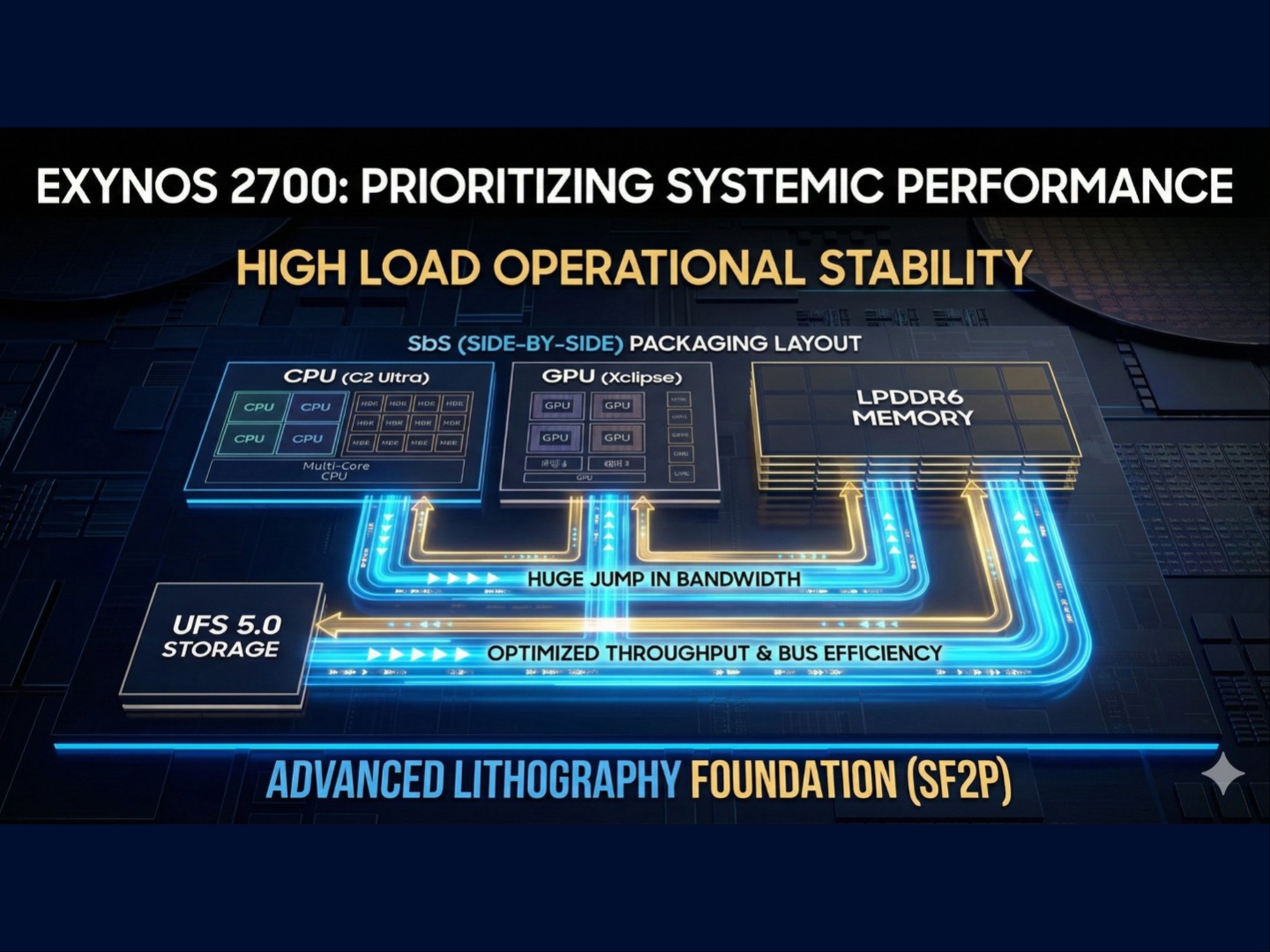
A previous Geekbench leak suggests a 30-40% increase in single-core and multi-core performance, all of which backs the Exynos 2700 SoC as a major upgrade over the Exynos 2600 SoC.
All this, when combined, gives the Exynos 2700 SoC the best chance to compete against Qualcomm’s Snapdragon 8 Elite Gen 6 and Gen 6 Pro, both launching later this year. Kiwoon further mentions sales estimates to reach 36.4 trillion won (or $24.99 billion) on Samsung’s non-memory division, which is a 21% YoY increase, making it an absolute pointer that Samsung is taking all its wrath to pit against other chipmakers.