- Claude Tag can break down large assignments, complete tasks independently, and deliver results without constant user prompts.
- It uses a shared company identity, allowing teams to continue projects seamlessly with access to previous context and conversations.
- Built directly into Slack, Claude Tag can access approved workplace knowledge, monitor discussions, and help automate project coordination.
Most workplace assistants inside Slack are built to answer questions when someone asks for help. Claude Tag is trying to do something different. The new tool from Anthropic is designed to work more like a shared team member.
Instead of responding to a prompt and waiting for the next instruction, it can take a larger assignment, split it into smaller tasks, work through them on its own, and then return with the finished result. That sounds like a small difference, but inside large companies, it changes how people use these tools.
For example, if a team needs research, documentation, project updates, or information collected from different conversations, Claude Tag can handle the work in the background rather than requiring constant back-and-forth messages.
How Claude Tag supports team collaboration
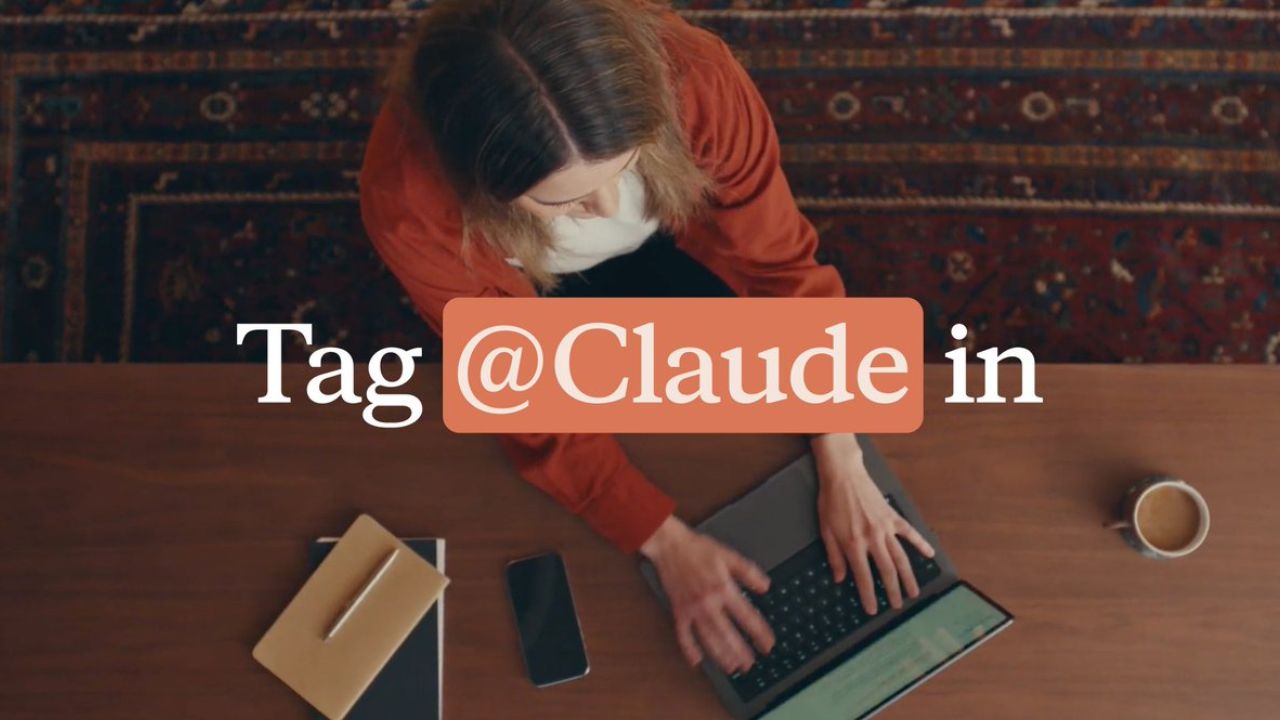
One of the more interesting parts of Claude Tag is that it works through a shared company identity. That means employees aren’t starting from scratch every time they open a conversation. If someone begins a project and leaves midway through it, another teammate can open the same thread later and continue where things stopped.
The context stays available, making handovers much easier than traditional chatbot interactions. For companies where multiple people work on the same project, that could end up being one of the most useful features.

Built-in memory and workspace controls
Anthropic has also added a memory layer that allows Claude Tag to pull information from Slack conversations when permissions are available. In practical terms, it can search for background details before completing a task instead of relying only on information provided in a single message.
Administrators still control what the system can access. A legal team can have its own workspace, while engineering or product teams can operate in separate environments. This reduces the chances of sensitive information crossing into the wrong department.
Automatic monitoring of important conversations
There is also a monitoring feature that allows Claude Tag to join conversations automatically when it detects something important, such as a missed deadline, pending action item, or update that should be shared with the group.
Why Anthropic is targeting enterprise customers
The launch says a lot about where Anthropic sees its future growth. Consumer chatbots get attention, but business customers generate more predictable revenue and usually stay subscribed longer. That’s why nearly every major technology company is chasing enterprise software right now.
Recent business software data suggests Anthropic has gained ground among corporate customers and now competes closely with other major providers in the workplace productivity space. The strategy behind Claude Tag is pretty clear. Instead of asking companies to learn a new platform, Anthropic is placing the product directly inside Slack, where employees already spend most of their day.
Keep up with the tech that actually matters.
Add us as a preferred source on Google Search for quicker access to our coverage.
Overall, the main idea behind Claude Tag is reducing the amount of project coordination that normally happens between employees. Whether it can deliver on that promise at scale remains to be seen, but Anthropic is clearly moving beyond simple workplace assistants and toward tools that can participate in day-to-day company operations in a much larger way. Let me know your thoughts on this new initiative. Will it help, or is it just a feature that exists? Thank you.