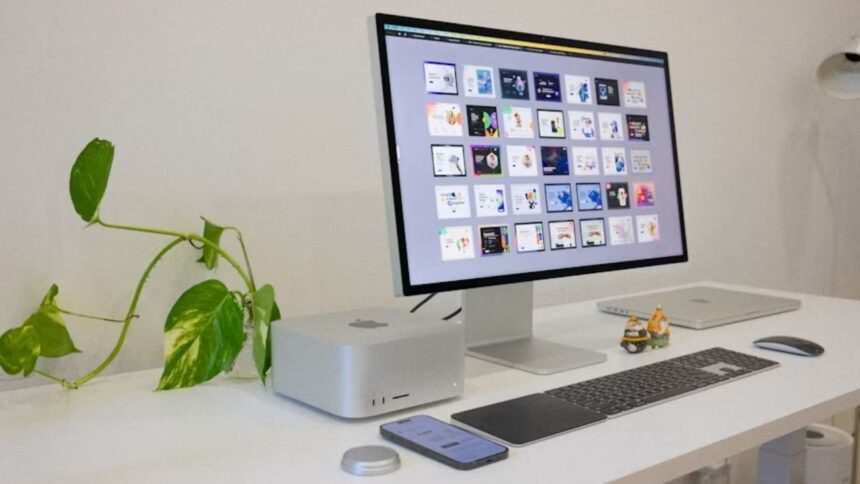
- AI Hardware Demand is pushing Apple’s Mac mini and Mac Studio into the growing enterprise AI market.
- Businesses are turning to local AI computing to improve data privacy and reduce reliance on cloud infrastructure.
- Memory shortages are delaying high-end Mac configurations, giving Nvidia’s compact AI workstations a chance to attract buyers.
The new Mac refresh from Apple is coming at an unusually odd period, and perhaps the reason could be attributed less to consumers and more to the increasing AI hardware demand. While Apple always sticks to releasing new Macs during the latter part of the year, it seems like Apple has released its new Mac Mini and Mac Studio during the month of August, right before the expected launch of the iPhones.
All these seem to make some sort of sense due to the surprising business demand for Macs to handle AI workloads. Let’s break down the story completely and get to know what Apple is up to.
AI hardware demand catches Apple off guard as businesses turn to Mac for local AI
As per the report from The Information, the AI hardware demand has caused Apple’s Mac mini and Mac Studio to become unexpectedly popular among businesses, AI developers, and small-scale AI companies. Mac sales have risen by about 29% YOY to $10.4 billion in the June quarter.
What is interesting about this is that the businesses are not buying Macs in order to do standard office work. There is an increasing trend among businesses to run AI models on their own hardware. This can help the organizations to keep the information confidential, as well as reduce reliance on cloud services, along with eliminating the costs related to running AI workloads using cloud services.
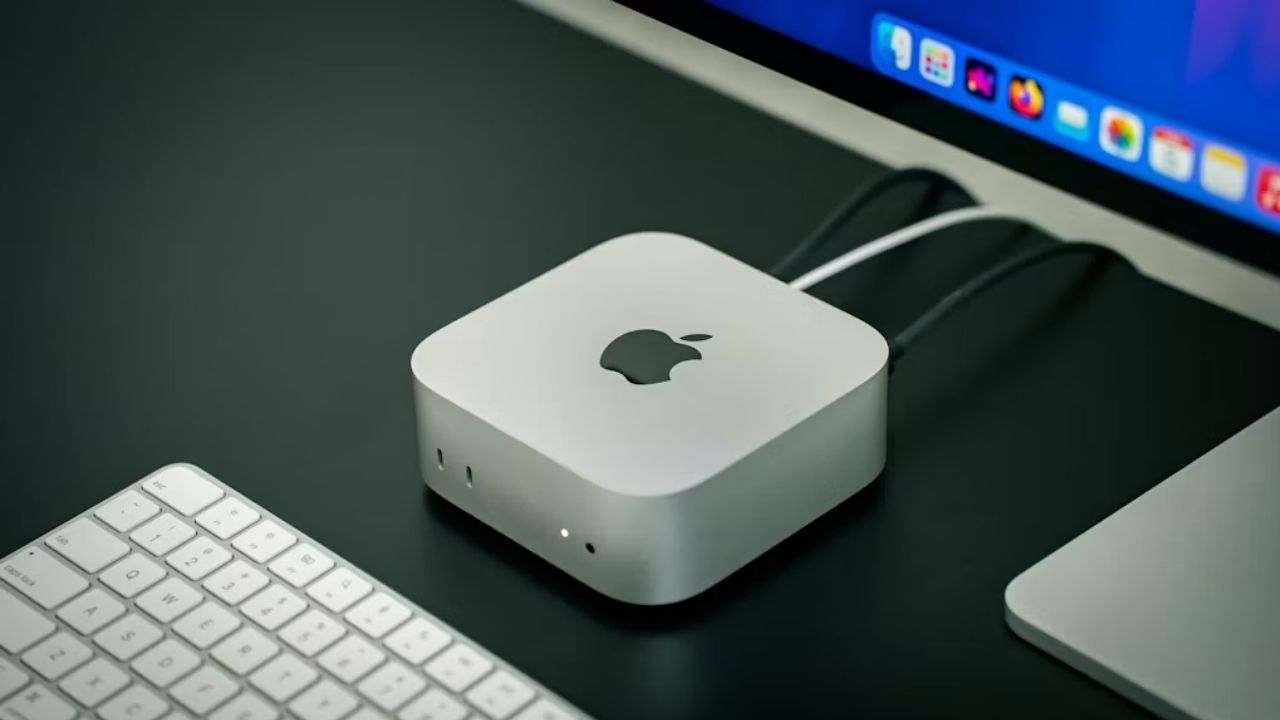
Apple certainly understands this trend. Apple’s latest Mac Studio can have as much as 512 GB of unified memory. At the same time, Apple allows connecting several Mac Studios using Thunderbolt 5 and RDMA protocols.
Four-machine clusters can perform up to three times better in AI inference tasks than a single machine, according to Apple. This is certainly a paradigm shift in the way we look at these compact machines.
They are no longer just compact Macs for professionals. They can serve as relatively compact local AI workstations for some developers and AI specialists.
Apple had no such strategy for enterprise customers
Here comes the exciting part of this narrative. Although business clients showed such an increased interest in AI, it seemed that Apple had no strategy and did not create any kind of organization for the enterprise market.
Even some business enterprises were trying to use Apple’s Private Cloud Compute system but apparently failed. Apple is cooperating with other organizations like WebAI and Mount Thor to offer the necessary platforms and environment to conduct AI on their systems.
In other words, Apple has come across a business opportunity unexpectedly. Memory shortages could provide an opportunity for Nvidia. Another thing that Apple will have to face in the process of implementing AI is the issue of supply.

As mentioned earlier, demand for hardware for strong AI is growing, while there is a global shortage of memory. There are reports that some premium models of the Mac mini and Mac Studio are hard to get, and enterprise customers might experience delays.
This provides a chance for Nvidia; the company’s small-form-factor DGX Spark is aimed at desktop AI development, featuring 128 GB of unified memory and the capability to combine several systems.
Overall, what makes this news especially interesting for me is not just the fact that Apple came out with two Mac models earlier than expected. It is the fact that the AI hardware demand is changing business expectations concerning desktop computers.
While Apple might not have been counting on its Mac mini and Mac Studio to be turned into attractive AI workhorses by the customers, the trend seems to be developing. As it develops further, Apple will probably have to create a significantly better enterprise strategy around the Mac model. And then, the Mac could very well become an integral part of Apple’s AI story.
Keep up with the tech that actually matters.
Add us as a preferred source on Google Search for quicker access to our coverage.