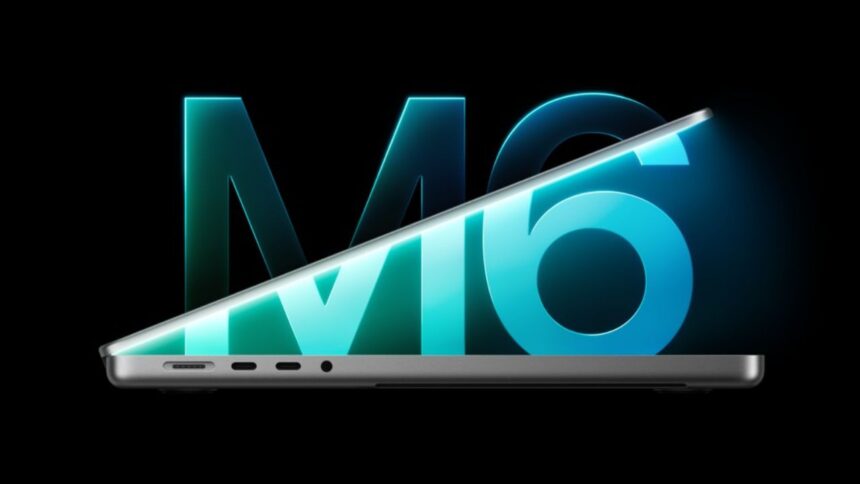
Apple announces new M6 MacBook Pro and 24-inch iMac

Jeeva Shanmugam
4 Min Read
Highlights
  • Features a redesigned 12-core CPU architecture, GPU Neural Accelerators, and Apple’s custom N1 chip for Wi-Fi 7.
  • Base 16GB MacBook Pro caps bandwidth at 153 GB/s, while all iMac models keep the full 170 GB/s.
  • iMac adds a binned 10-core base ($1,499) and 12-core tier ($1,699), while the M6 MacBook Pro starts at $1,999 with 1TB SSD.

Apple launched silicon updates to its desktop and portable systems lineup, giving us the M6 MacBook Pro and an upgraded 24-inch iMac. If you have been following the Apple launch schedule, then there are a few surprises here.

The base model 14-inch laptop is replaced by this year’s M6 series, whereas the iMac sees a significant upgrade from the M4 generation introduced in 2024. Here are some things that have actually been updated in these systems. Let’s see what they are up to.

Apple M6 MacBook and iMac are here: everything you need to know about it

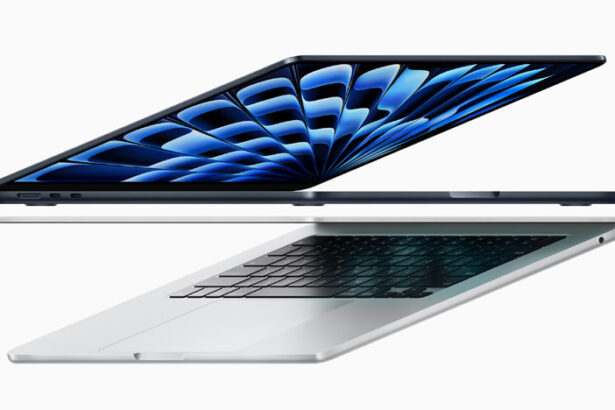
The exterior design hasn’t changed at all, but the chip architecture gets a good deal of structural re-architecture. The base M6 MacBook Pro features an M6 chip that has a 12-core CPU designed based on the 2+4+6 structure, which is supplemented by a 12-core GPU.

Apple incorporated separate Neural Accelerators directly into each GPU core, preserving the hardware-based ray tracing. The dedicated dual-core Neural Engine handles AI tasks locally.

Feature14-inch M6 MacBook ProM6 iMac (Base vs. Top)
CPU Architecture12-Core (2+4+6)10-Core/12-Core
GPU Core12-Core10-Core/12Core
Unified Memory16GB/24GB/32GB16GB/24GB/32GB
Base Bandwidth153 GB/s (16GB Model)170 GB/s (All configs)
Wireless ChipApple N1 (Wi-Fi 7/BT6)Apple N1 (Wi-Fi/BT6)
M6 MacBook Pro
Image Credits: Apple

That is where the careful consideration of the spec sheet becomes necessary when ordering:

  • Memory Bandwidth Limitation: In the case of the base M6 MacBook Pro configuration, one gets the 16GB unified memory by default; they can be upgraded up to 24GB and 32GB. But choosing 16GB will limit the memory bandwidth to 153 GB/s, and for 170GB/s one needs to go with either 24GB or 32GB memory option.
  • Storage Variants: The base storage capacity goes up to the nice 1TB SSD storage, with additional 2TB and 4TB options.
  • Wireless Network Improvement: Apple replaced regular third-party networking modules with its own N1 chip offering native Wi-Fi (802.11be) and Bluetooth 6 support.

Update to the iMac: binned chips & screen improvements

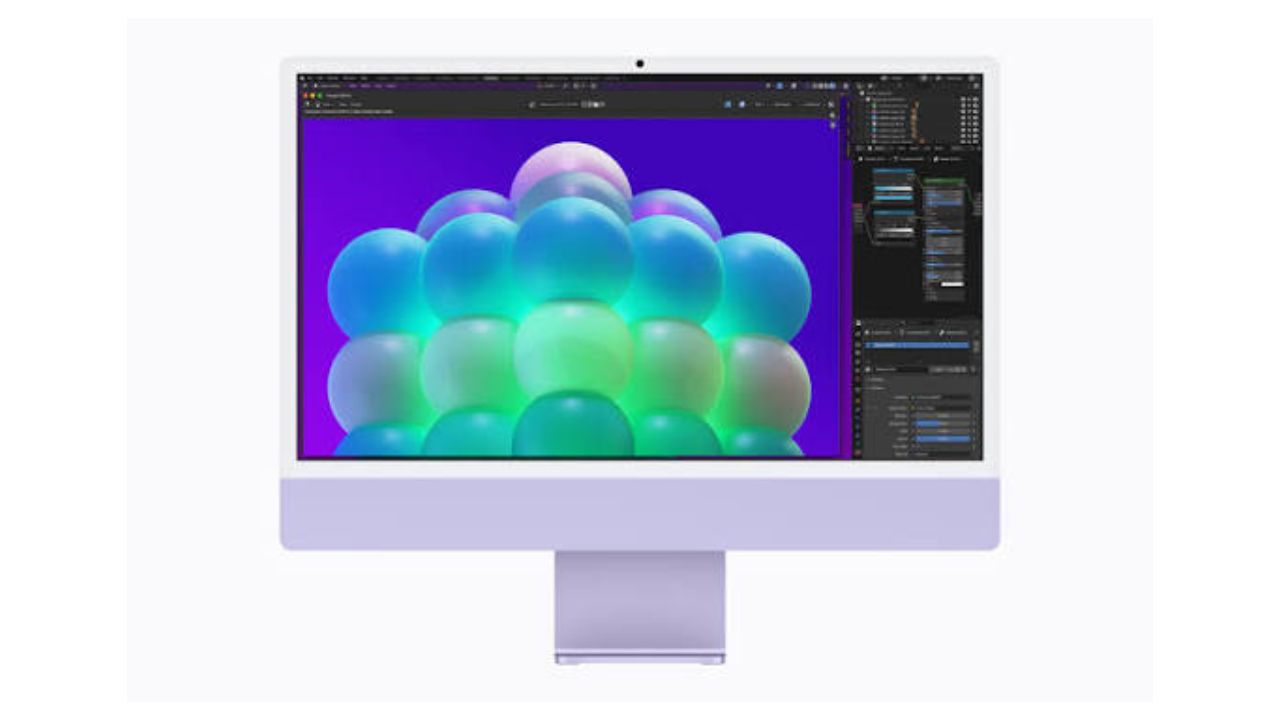
In this case, the company’s approach is somewhat unique. The iMac lineup is divided into two distinct hardware tiers. While the high-end iMac model utilized the same fully functional 12-core M6 processor that powers the M6 MacBook Pro, the standard iMac comes with a binned version of the chip, consisting of a 10-core (2+3+5) CPU along with a 10-core GPU.

Curiously, memory bandwidth was not capped for the desktop version. Even if you select the default 16GB iMac, you will still get the full 170GB/s of memory bandwidth. The storage capacity starts at 256GB SSD, ranging upwards to 1TB in the entry-level device and to 2TB in the high-end variant. It is interesting that Apple now offers their nano-textured glass screen option for the iMac range as well.

Pricing and availability

  • Base 14-inch M6 MacBook Pro: Starts at $1,999.
  • 10-Core M6 iMac: Starts at $1,499.
  • 12-Core M6 iMac: Starts at $1,699.

Pre-orders kick off today, October 28, with physical store availability and shipments landing on Friday, November 6. What you think about the devices? Let me know in the comment section.

Keep up with the tech that actually matters.

From breaking news to deep dives, TrueTech brings you the tech stories worth knowing.
Add us as a preferred source on Google Search for quicker access to our coverage.

Add TrueTech as a preferred source on Google
Share This Article
Making spicy content on the Internet!
Highlights
  • Features a redesigned 12-core CPU architecture, GPU Neural Accelerators, and Apple’s custom N1 chip for Wi-Fi 7.
  • Base 16GB MacBook Pro caps bandwidth at 153 GB/s, while all iMac models keep the full 170 GB/s.
  • iMac adds a binned 10-core base ($1,499) and 12-core tier ($1,699), while the M6 MacBook Pro starts at $1,999 with 1TB SSD.

Apple launched silicon updates to its desktop and portable systems lineup, giving us the M6 MacBook Pro and an upgraded 24-inch iMac. If you have been following the Apple launch schedule, then there are a few surprises here.

The base model 14-inch laptop is replaced by this year’s M6 series, whereas the iMac sees a significant upgrade from the M4 generation introduced in 2024. Here are some things that have actually been updated in these systems. Let’s see what they are up to.

Apple M6 MacBook and iMac are here: everything you need to know about it

The exterior design hasn’t changed at all, but the chip architecture gets a good deal of structural re-architecture. The base M6 MacBook Pro features an M6 chip that has a 12-core CPU designed based on the 2+4+6 structure, which is supplemented by a 12-core GPU.

Apple incorporated separate Neural Accelerators directly into each GPU core, preserving the hardware-based ray tracing. The dedicated dual-core Neural Engine handles AI tasks locally.

Feature14-inch M6 MacBook ProM6 iMac (Base vs. Top)
CPU Architecture12-Core (2+4+6)10-Core/12-Core
GPU Core12-Core10-Core/12Core
Unified Memory16GB/24GB/32GB16GB/24GB/32GB
Base Bandwidth153 GB/s (16GB Model)170 GB/s (All configs)
Wireless ChipApple N1 (Wi-Fi 7/BT6)Apple N1 (Wi-Fi/BT6)
M6 MacBook Pro
Image Credits: Apple

That is where the careful consideration of the spec sheet becomes necessary when ordering:

  • Memory Bandwidth Limitation: In the case of the base M6 MacBook Pro configuration, one gets the 16GB unified memory by default; they can be upgraded up to 24GB and 32GB. But choosing 16GB will limit the memory bandwidth to 153 GB/s, and for 170GB/s one needs to go with either 24GB or 32GB memory option.
  • Storage Variants: The base storage capacity goes up to the nice 1TB SSD storage, with additional 2TB and 4TB options.
  • Wireless Network Improvement: Apple replaced regular third-party networking modules with its own N1 chip offering native Wi-Fi (802.11be) and Bluetooth 6 support.

Update to the iMac: binned chips & screen improvements

In this case, the company’s approach is somewhat unique. The iMac lineup is divided into two distinct hardware tiers. While the high-end iMac model utilized the same fully functional 12-core M6 processor that powers the M6 MacBook Pro, the standard iMac comes with a binned version of the chip, consisting of a 10-core (2+3+5) CPU along with a 10-core GPU.

Curiously, memory bandwidth was not capped for the desktop version. Even if you select the default 16GB iMac, you will still get the full 170GB/s of memory bandwidth. The storage capacity starts at 256GB SSD, ranging upwards to 1TB in the entry-level device and to 2TB in the high-end variant. It is interesting that Apple now offers their nano-textured glass screen option for the iMac range as well.

Pricing and availability

  • Base 14-inch M6 MacBook Pro: Starts at $1,999.
  • 10-Core M6 iMac: Starts at $1,499.
  • 12-Core M6 iMac: Starts at $1,699.

Pre-orders kick off today, October 28, with physical store availability and shipments landing on Friday, November 6. What you think about the devices? Let me know in the comment section.

Keep up with the tech that actually matters.

From breaking news to deep dives, TrueTech brings you the tech stories worth knowing.
Add us as a preferred source on Google Search for quicker access to our coverage.

Add TrueTech as a preferred source on Google
Share This Article
Making spicy content on the Internet!