- Google is introducing Android developer verification across all apps to reduce malware risks and improve user trust beyond just the Play Store.
- The rollout begins with testing in late 2025 and will become mandatory in select countries by 2026, followed by a global launch in 2027.
- Developers will get access to a new Android Developer Console and specialized accounts, making the verification process easier for professionals, students, and hobbyists.
Google is implementing a major change to the Android ecosystem by making Android developer verification mandatory for all developers starting next year. The policy applies to all apps running on devices with Google services, not just those on the Play Store, with the goal of reducing fake apps, malware, and scams while preserving Android’s open platform.
Google brings mandatory Android developer verification to make apps safer
Why this step is important?
Google has been facing a lot of issues with malicious apps. According to the company’s own numbers, apps installed outside the Play Store are over 50 times more likely to have malware. This is the main reason they are now asking for developer verification everywhere.
Suzanne Frey, VP of Product for Android, compared this system to an airport ID check. Basically, it doesn’t check what is inside the app but only verifies the person behind it. If Google knows who made the app, it becomes much easier to hold bad actors accountable.
Already working in the Play Store
Google already started developer verification in the Play Store back in 2023. Since then, it has seen fewer fake developers hiding behind anonymous accounts. Now they want to bring the same rule across the full Android ecosystem.
This decision also got backing from other countries and organizations. Brazil’s FEBRABAN, Indonesia’s Ministry of Communications, and Thailand’s Ministry of Digital Economy all said this step improves safety while still keeping the platform open. The Alliance of Developers also welcomed it, saying it builds more trust in Android as a whole.
What developers need to do?
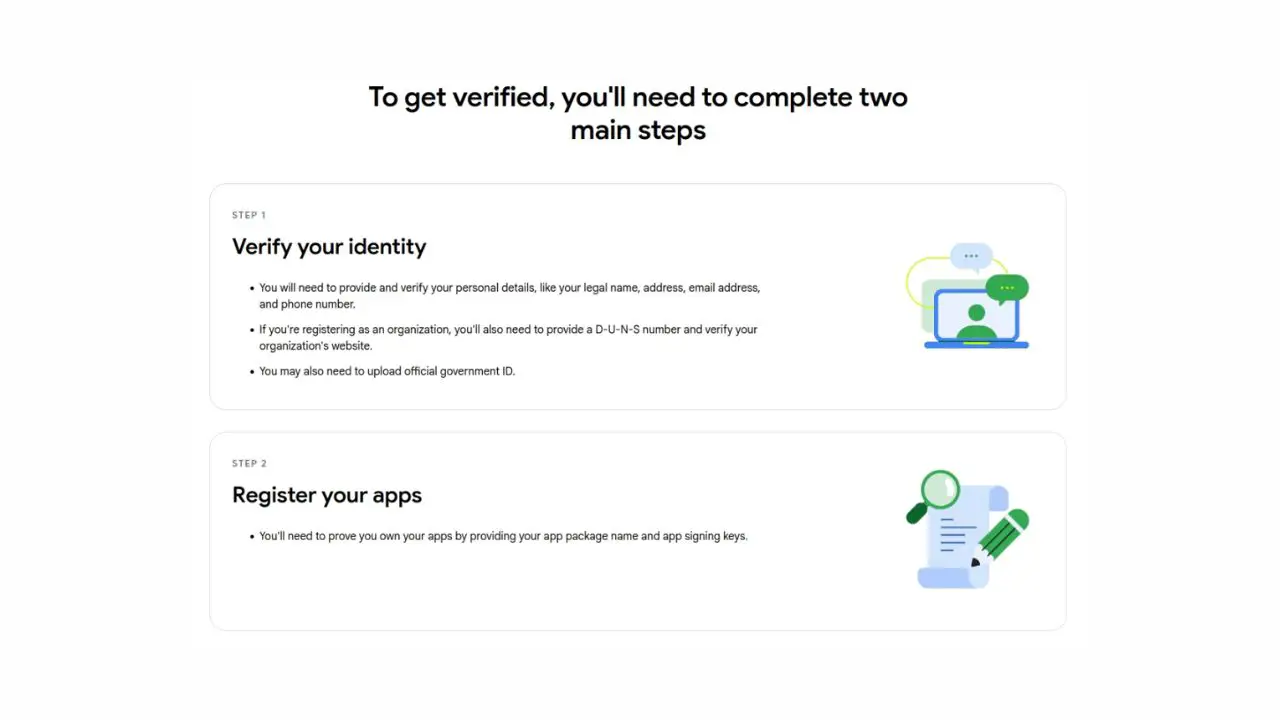
For developers, Google is trying to make this process easy. A new Android Developer Console will be released to guide them through the verification. There will also be special accounts for students and hobby developers so that they can still publish apps without too much trouble.
If you are already a developer in the Google Play Store, most likely you are already verified. So you don’t need to do anything new. The real impact will be for developers who release apps outside of Play Store or on third party app stores.
Timeline of the rollout
Google is not making this change overnight. They are giving time for developers to adjust.
- October 2025 – Early testing will begin.
- March 2026 – Verification opens for all developers.
- September 2026 – Becomes mandatory in Brazil, Indonesia, Singapore and Thailand.
- From 2027 – Global rollout begins.
This timing is important because of the Epic Games antitrust case that forces Google to allow third party app stores. With Android developer verification in place, Google is making sure that even if more app stores come in, safety won’t be compromised.

The new Android developer verification rule is a big shift for Android. It means every developer has to show who they are before distributing apps. This protects users from fraud and malware while still keeping the open nature of Android alive.
For developers, the process is made simple with new tools and accounts for different groups. As the rollout expands worldwide, Android users can expect more trust and security in the apps they install.