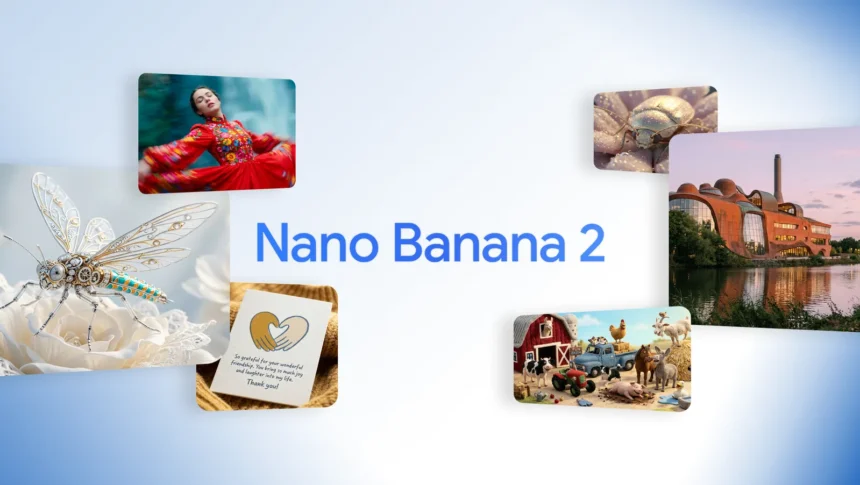
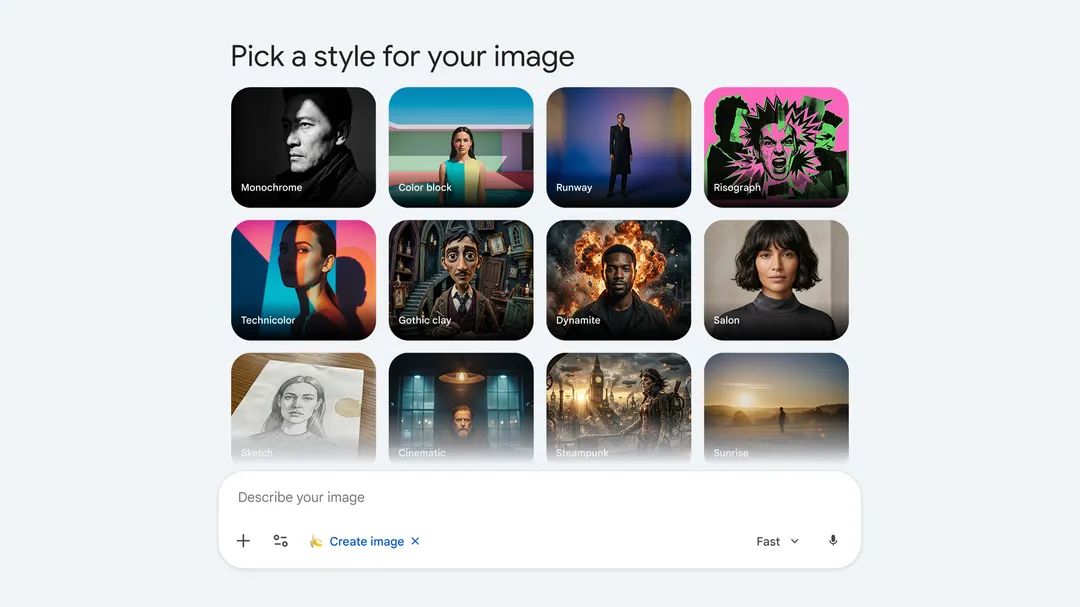
- Nano Banana 2 combines Gemini Flash speed with advanced reasoning and real-world knowledge for rapid, accurate visual creation and editing.
- Enhanced instruction following, subject consistency, 4K output support, and sharper textures deliver production-ready, photorealistic results.
- Rolling out to Gemini, Search, Google Ads, Vertex AI, and developer tools, while strengthening AI transparency.
Google has released Nano Banana 2 (Gemini 3.1 Flash Image), a new AI image-generation model to make creating and editing visuals faster and more intuitive across its ecosystem. The update brings together the speed of Gemini Flash with the advanced reasoning and visual quality previously associated with premium tools.
Faster image creation with smarts built in
Nano Banana 2 centers on reducing the time between idea and output. Google says the model combines rapid generation speeds with improved accuracy, allowing users to iterate quickly while maintaining high-quality results.
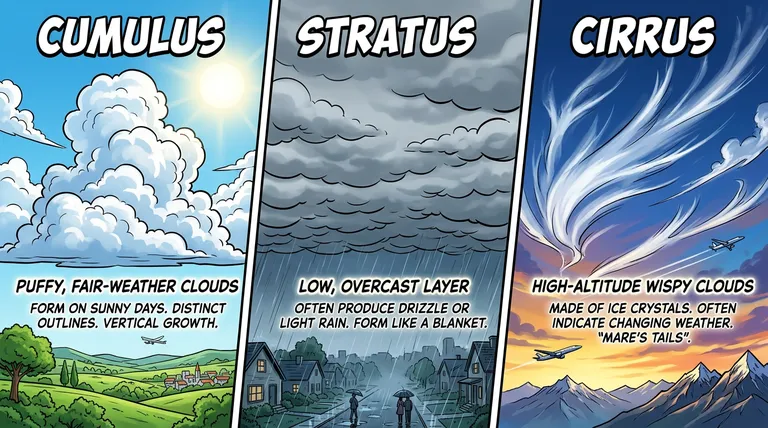
By leveraging on Gemini’s extensive knowledge base and real-time web information, the model can more accurately render real-world subjects and create informative visuals. This expanded understanding supports tasks such as producing diagrams, turning notes into infographics, and generating data visualizations.
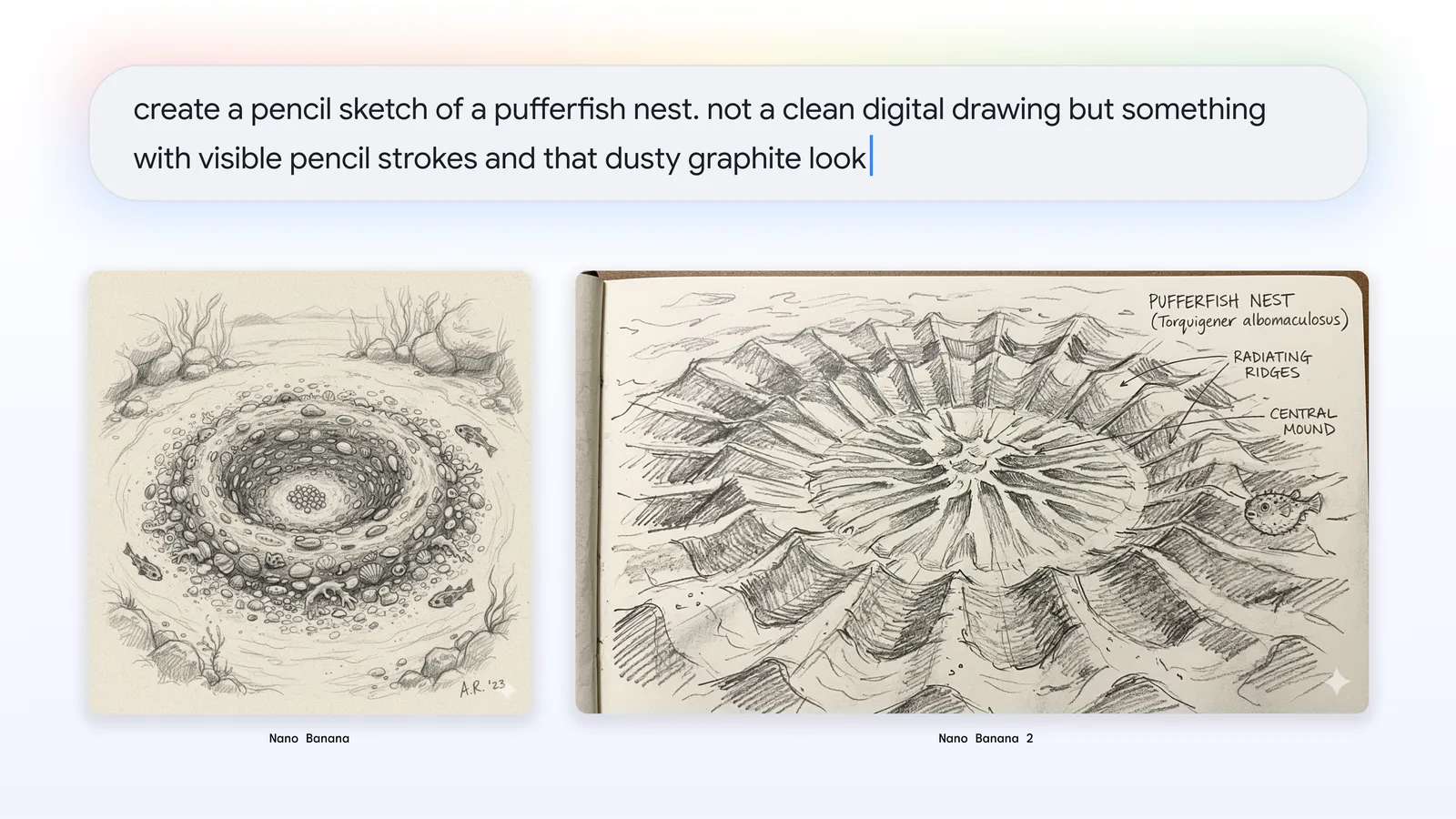
One of the standout improvements is more precise text rendering within images. Users can create visuals featuring legible typography for marketing mockups, social posts, or greeting cards. The model also enables text translation and localization inside images, helping creators adapt content for international audiences.
Visual quality and control improvements
Google says Nano Banana 2 bridges the gap between speed and visual fidelity. Key upgrades include:
- Subject consistency: Maintains the likeness of up to five characters and preserves detail across as many as 14 objects within one workflow.
- More accurate instruction following: Capturing subtle creative directions more reliably.
- Production-ready outputs: Supports aspect ratios and resolutions ranging from 512px to 4K.
- Enhanced realism: Improved lighting, textures, and fine details for more lifelike imagery.
These improvements will support storytelling, marketing design, and professional creative workflows.

Related
Nano Banana Pro vs. Nano Banana 2
Google continues to offer Nano Banana Pro for projects that require maximum factual precision and high-fidelity rendering. Nano Banana 2, meanwhile, is optimized for rapid generation, quick edits, and precise prompt interpretation while still delivering strong visual quality.
Rolling out across Google platforms
Nano Banana 2 is now available across several Google services:
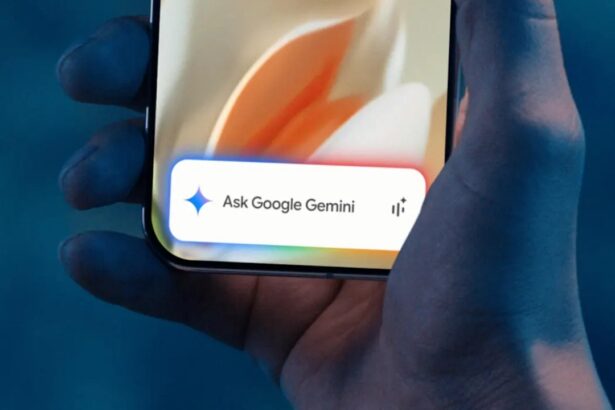
- Gemini app: Now replaces Nano Banana Pro across Fast, Thinking, and Pro modes. Google AI Pro and Ultra subscribers can still regenerate images using Nano Banana Pro when needed.
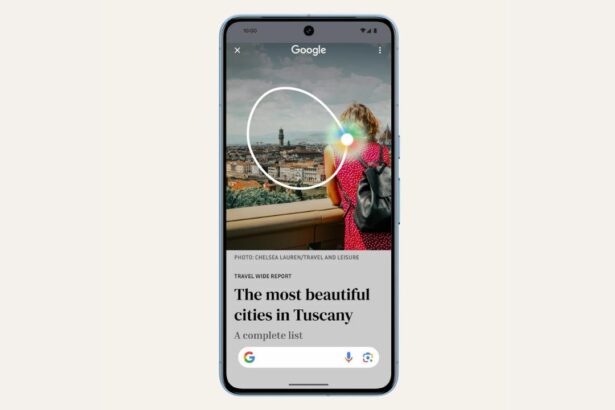
- Search: Available in AI Mode and Lens across mobile apps and web browsers, expanding to 141 additional countries and eight new languages.
- AI Studio & Gemini API: Available in preview for developers.
- Google Cloud Vertex AI: Available in preview via the Gemini API.
- Flow: Now the default image model for all users at no credit cost.
- Google Ads: Powers image suggestions for campaign creation.
AI transparency and verification
As generative media becomes more widespread, Google says it is expanding tools that help people identify AI-generated content. The company is using its SynthID watermarking technology with interoperable C2PA Content Credentials to provide clearer context about whether and how AI was used.
To sum it up, Nano Banana 2 shows Google’s desire to make advanced image generation faster, more accurate, and easier to use. By integrating the model across consumer apps, developer platforms, and advertising tools, the company is widening access to creative AI while continuing to improve transparency measures that help users understand AI-generated media.