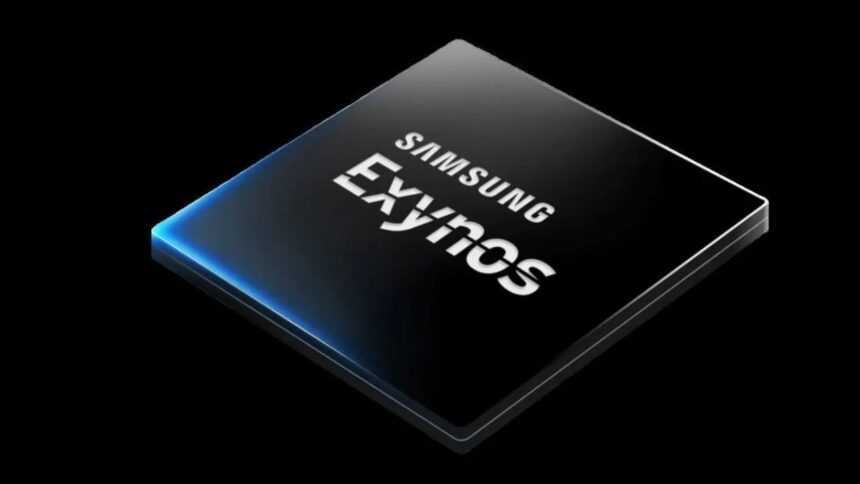
Samsung develops a way to make Exynos 2600 SoC cooler

Aadil Raval
2 Min Read
Highlights
  • Samsung is working on Exynos 2600 SoC and apparently, it just got a bit more 'cooler'.
  • The new tech helps dissipate heat from the chipset making it easier to cool down and thus, could unlock better performance.
  • Exynos 2600 will power Galaxy S26 and S26 Plus (in some markets) that will be launched early next year.

The upcoming Exynos 2600 SoC is reportedly churning out impressive results on 3DMark and Geekbench thanks to a new cooling mechanism infused on the chipset called ‘Heat Pass Block (HPB)’.

Your Exynos 2600 SoC will be cooler, does it mean better performance?  

According to ZDNet Korea, Samsung’s next-gen Exynos 2600 SoC is slated to carry a Heat Pass Block (HPB), a material used within semiconductor packages to produce the application processor (AP) for Galaxy phones. Apart from the components that the chipset offers – CPU, GPU, NPU, etc., it will have this new layer in the stack made up of a copper heat sink, which works by dissipating heat. This will translate into better performance.

Samsung Galaxy S26 Ultra Design - Powered by Exynos 2600 SoC
Image Credits: Samsung

The HPB is applied inside the package on the Exynos 2600 SoC. In previous chipsets, the Exynos would be based on a package-on-package (PoP) structure, adding DRAM on top. The HPB on-board Exynos 2600 SoC has been integrated on the AP along with DRAM. Thanks to HPB’s proximity to the heat source, it eventually makes it easier to pull off heat from the chipset, which improves performance as a result.

For the unversed, the heat sink acts as a heat spreader, dissipating the heat when the chipset starts generating heat. 

Exynos 2600, the one that will power the upcoming Galaxy S26 Series, is produced on a 2nm Gate-All-Around (GAA) processor. Chipmakers use a lot of different mechanisms and tactics to prevent energy loss, and GAA is one of them. It will be a part of Galaxy S26 and S26 Plus as they arrive early next year, while the S26 Ultra opts for a Snapdragon 8 Elite2 SoC instead. 

It remains to be seen if Samsung decides to integrate Exynos in all markets, although that seems unlikely as the dual chip strategy has been in place for years.


Share This Article
Follow:
A wordsmith, a kin tech observer, a sci-fi fanatic and a scientific documentary buff.
Highlights
  • Samsung is working on Exynos 2600 SoC and apparently, it just got a bit more 'cooler'.
  • The new tech helps dissipate heat from the chipset making it easier to cool down and thus, could unlock better performance.
  • Exynos 2600 will power Galaxy S26 and S26 Plus (in some markets) that will be launched early next year.

The upcoming Exynos 2600 SoC is reportedly churning out impressive results on 3DMark and Geekbench thanks to a new cooling mechanism infused on the chipset called ‘Heat Pass Block (HPB)’.

Your Exynos 2600 SoC will be cooler, does it mean better performance?  

According to ZDNet Korea, Samsung’s next-gen Exynos 2600 SoC is slated to carry a Heat Pass Block (HPB), a material used within semiconductor packages to produce the application processor (AP) for Galaxy phones. Apart from the components that the chipset offers – CPU, GPU, NPU, etc., it will have this new layer in the stack made up of a copper heat sink, which works by dissipating heat. This will translate into better performance.

Samsung Galaxy S26 Ultra Design - Powered by Exynos 2600 SoC
Image Credits: Samsung

The HPB is applied inside the package on the Exynos 2600 SoC. In previous chipsets, the Exynos would be based on a package-on-package (PoP) structure, adding DRAM on top. The HPB on-board Exynos 2600 SoC has been integrated on the AP along with DRAM. Thanks to HPB’s proximity to the heat source, it eventually makes it easier to pull off heat from the chipset, which improves performance as a result.

For the unversed, the heat sink acts as a heat spreader, dissipating the heat when the chipset starts generating heat. 

Exynos 2600, the one that will power the upcoming Galaxy S26 Series, is produced on a 2nm Gate-All-Around (GAA) processor. Chipmakers use a lot of different mechanisms and tactics to prevent energy loss, and GAA is one of them. It will be a part of Galaxy S26 and S26 Plus as they arrive early next year, while the S26 Ultra opts for a Snapdragon 8 Elite2 SoC instead. 

It remains to be seen if Samsung decides to integrate Exynos in all markets, although that seems unlikely as the dual chip strategy has been in place for years.

Share This Article
Follow:
A wordsmith, a kin tech observer, a sci-fi fanatic and a scientific documentary buff.