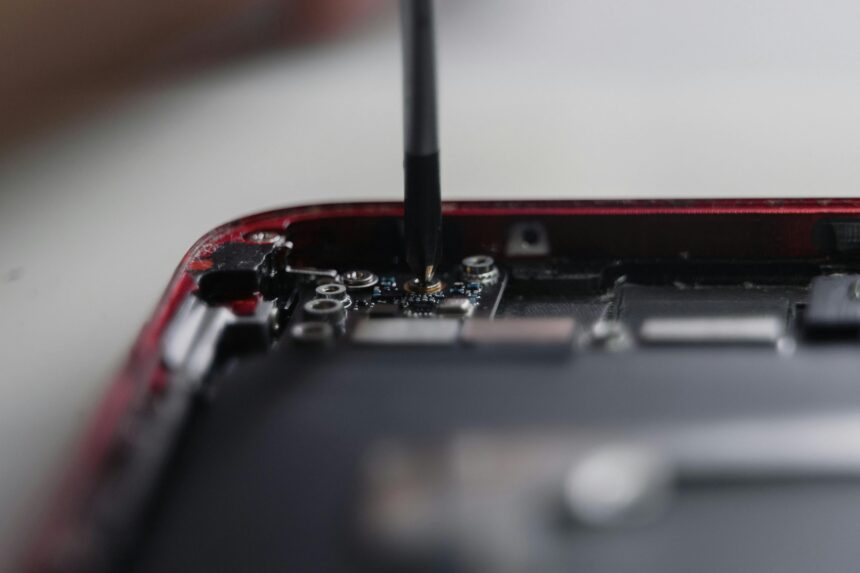
UFS 5.0 storage system announced with speeds up to 10.8GB/s

Aadil Raval
2 Min Read
Highlights
  • JEDEC announces the next-gen UFS 5.0 storage system capable of reaching 10.8GB/second of speeds.
  • This is approx. 160% more than UFS 4.0 released in 2022, showcasing the colossal uptick in tech.
  • It is yet to be seen when manufacturers take the UFS 5.0 wagon given the fact that the adoption of UFS 4.0 has been slow.

The Joint Electron Device Engineering Council (JEDEC), the organization responsible for standardizing flash storage technologies, has officially unveiled the UFS 5.0 (Universal Flash Storage) standard, marking a major leap forward in data transfer speeds and efficiency.

UFS 5.0 storage system takes a 160% uptick in terms of speeds compared to UFS 4.0

UFS 5.0 standard unlocks data speeds of up to 10.8GB/second. For context, the current-gen UFS 4.0 standard can pull off 4.2GB/second of data transfer speed, and it was released back in 2022. This means UFS 5.0 took a colossal 160% leap in terms of speeds. 

UFS 5.0 storage system
Image Credits: GSMArena

For comparison, UFS 3.0 was capable of reaching 2.1GB/second, and we have seen a plethora of flagship phones built on this standard only to be replaced by UFS 4.0 a few years ago. In fact, Google switched to the UFS 4.1 standard only with the latest Google Pixel 10 series, and now, we have twice as fast data speeds as ever.

JEDEC says that the boost in speeds will help satisfy growing AI demands, especially when tech companies have been upgrading their portfolio. We recently saw OpenAI sign a multi-billion-dollar deal with both AMD and Nvidia to deploy more than 16 gigawatts of GPUs to propel the future of AI performance. 

According to JEDEC, the faster UFS 5.0 storage allows mobile applications to churn out high performance with low power consumption. It also maintains reverse compatibility with UFS 4.x hardware, ensuring more devices can upgrade to the new storage system as needed.

Manufacturers have shown resistance in adopting UFS 4.0. As aforementioned, Google recently upgraded to UFS 4.0 even though the tech has been available for almost three years. It shows how the adoption rate is slow, and we could see the same trend being followed with UFS 5.0, even though it brings much to the table.

Share This Article
Follow:
A wordsmith, a kin tech observer, a sci-fi fanatic and a scientific documentary buff.
Highlights
  • JEDEC announces the next-gen UFS 5.0 storage system capable of reaching 10.8GB/second of speeds.
  • This is approx. 160% more than UFS 4.0 released in 2022, showcasing the colossal uptick in tech.
  • It is yet to be seen when manufacturers take the UFS 5.0 wagon given the fact that the adoption of UFS 4.0 has been slow.

The Joint Electron Device Engineering Council (JEDEC), the organization responsible for standardizing flash storage technologies, has officially unveiled the UFS 5.0 (Universal Flash Storage) standard, marking a major leap forward in data transfer speeds and efficiency.

UFS 5.0 storage system takes a 160% uptick in terms of speeds compared to UFS 4.0

UFS 5.0 standard unlocks data speeds of up to 10.8GB/second. For context, the current-gen UFS 4.0 standard can pull off 4.2GB/second of data transfer speed, and it was released back in 2022. This means UFS 5.0 took a colossal 160% leap in terms of speeds. 

UFS 5.0 storage system
Image Credits: GSMArena

For comparison, UFS 3.0 was capable of reaching 2.1GB/second, and we have seen a plethora of flagship phones built on this standard only to be replaced by UFS 4.0 a few years ago. In fact, Google switched to the UFS 4.1 standard only with the latest Google Pixel 10 series, and now, we have twice as fast data speeds as ever.

JEDEC says that the boost in speeds will help satisfy growing AI demands, especially when tech companies have been upgrading their portfolio. We recently saw OpenAI sign a multi-billion-dollar deal with both AMD and Nvidia to deploy more than 16 gigawatts of GPUs to propel the future of AI performance. 

According to JEDEC, the faster UFS 5.0 storage allows mobile applications to churn out high performance with low power consumption. It also maintains reverse compatibility with UFS 4.x hardware, ensuring more devices can upgrade to the new storage system as needed.

Manufacturers have shown resistance in adopting UFS 4.0. As aforementioned, Google recently upgraded to UFS 4.0 even though the tech has been available for almost three years. It shows how the adoption rate is slow, and we could see the same trend being followed with UFS 5.0, even though it brings much to the table.
Share This Article
Follow:
A wordsmith, a kin tech observer, a sci-fi fanatic and a scientific documentary buff.