- Google introduced Googlebook, a new AI-focused laptop category with Gemini-powered features.
- Android Auto is getting design upgrades, smarter navigation, and deeper Gemini integration.
- Google expanded Gemini tools across Android, Chrome, and creator-focused apps.
Google commenced the countdown to Google I/O 2026 through The Android Show: I/O Edition, which showcased Android and Gemini together with upcoming ecosystem developments that will be shown at the company’s main developer conference on May 19.
Google has changed its event planning approach, which shows through the pre-I/O showcase. The main Google I/O keynote used to feature Android announcements as its most important element during past years. Google now presents its platform updates separately from its core artificial intelligence development, which lets Gemini and AI receive more exposure during the main event.
The company announced multiple significant features, which it implemented across its laptop systems, Android Auto, creator tools, Chrome browser, and growing Gemini ecosystem, despite announcing numerous minor updates.
Google introduces Googlebook, an AI-first laptop category
The event’s core announcement revealed Googlebook as a new laptop category that Google developed together with its major hardware partners Asus, Dell, HP, Lenovo, and Acer.
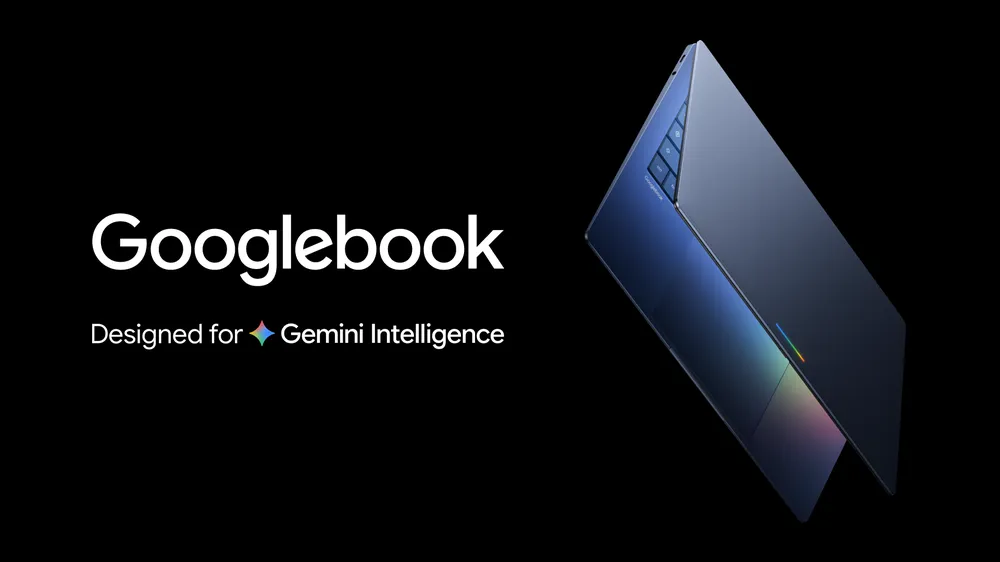
Google provided a brief glimpse of its hardware products but kept their pricing information and availability details confidential. The product seems to function as an advanced iteration of Chromebooks, which dedicated its design to operate with Gemini-based artificial intelligence systems.
The main feature of the system operates through Magic Pointer, which functions as an AI-powered cursor that identifies user-pointer locations to provide relevant action suggestions. The system enables users to schedule meetings through email date hover functionality, which provides an instant scheduling prompt without the need for application switching.


Google also highlighted tighter Android integration. Users will reportedly be able to access apps installed on their Android phones directly from the laptop without additional downloads or the clunky touchscreen-style experiences that earlier Chromebook Android app support sometimes delivered.
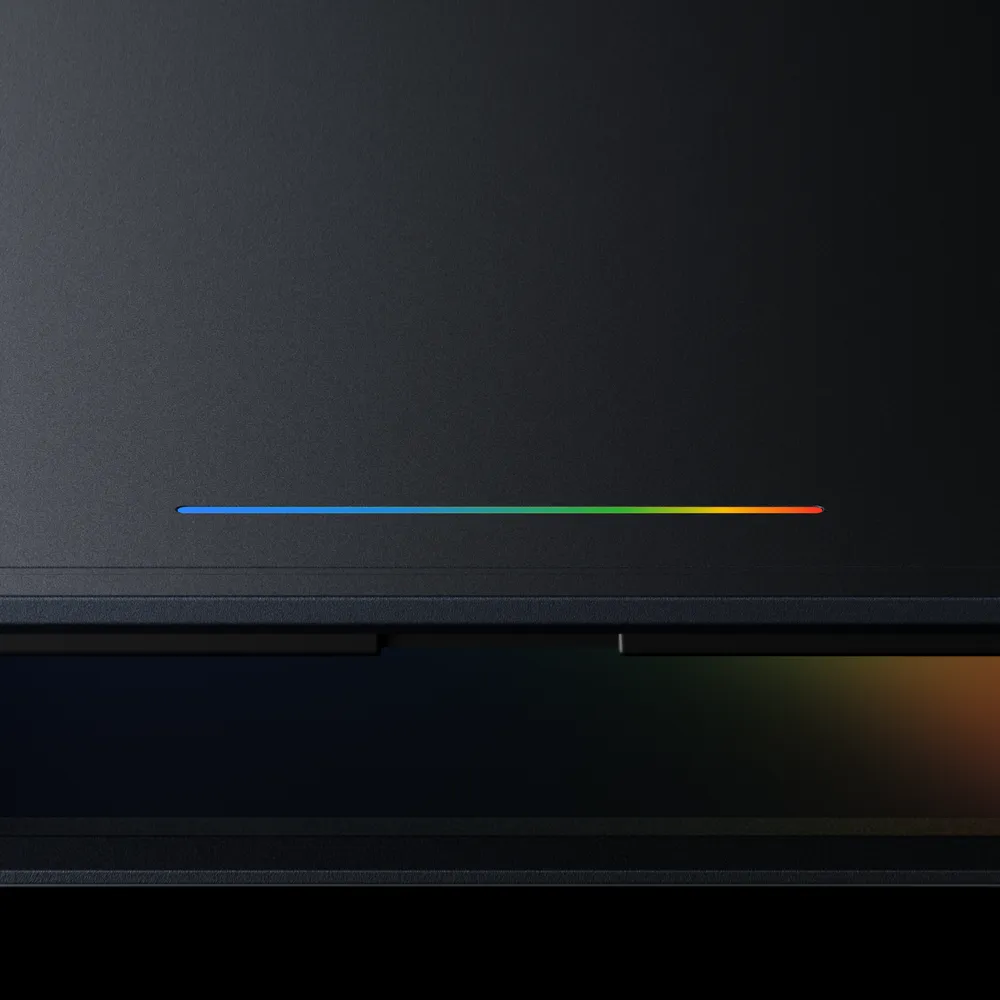
Googlebook devices will be physically adorned with a slim illuminated Glowbar. The coloration of the Glowbar is based upon the four colors designated as the Google logo colors.
Android Auto gets smarter and more personalized
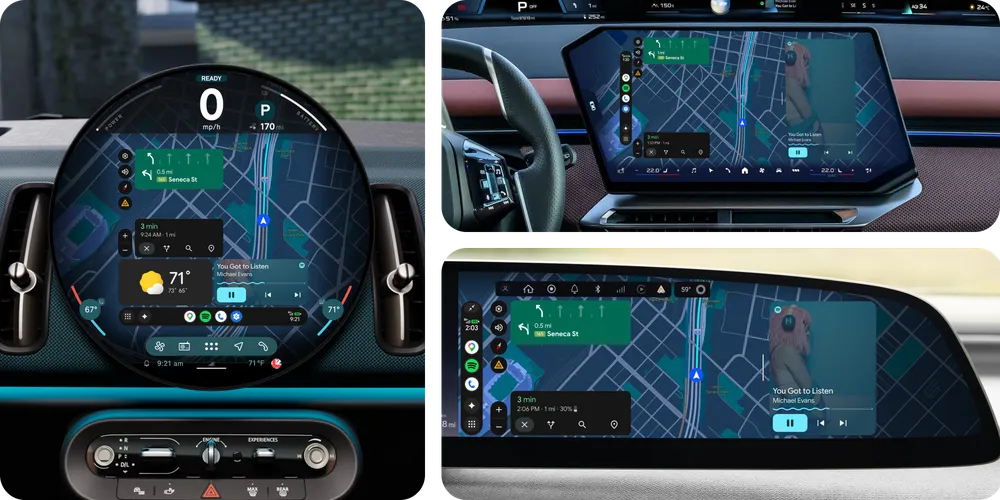
Google also released a major update for Android Auto, which improved its design features, navigation capabilities, entertainment options, and artificial intelligence support.
Material 3 Expressive support
Android Auto will use Google Material 3 Expressive design language, which lets users to create their own custom themes by selecting colors and fonts from Pixel devices that work with their vehicle display system.
The new custom widgets offer drivers instant access to information, which includes real-time weather reports and smart home system controls that enable garage door operation.
Improved navigation experience
Google Maps in Android Auto has got visual upgrades that include clearer 3D mapping and lane-level guidance.
The enhancements were made to keep the driver oriented and attentive, paying more regard to safety features when driving, thereby probing the nerves and creating a very easy and helpful move.
YouTube Playback in cars
Google is implementing YouTube video playback for supported vehicles in 1080p 60 fps full HD resolution in the parked status of the vehicle.
Upon driving initiation, playback will shift to audio-only mode automatically as per safety requirements.
Gemini in the driver’s seat
Gemini is also becoming a bigger part of the in-car experience.
According to Google, users can complete tasks through voice commands, which allow them to order food from DoorDash, and Gemini provides assistance with contextual actions that enable users to respond to incoming messages in a smarter way.

Gemini Intelligence expands across its ecosystem
Google confirmed that a new wave of Gemini Intelligence features would begin to roll out later this year, primarily targeting upcoming Samsung Galaxy and Google Pixel devices.
In time, TVs, wearables, smart glasses, and cars are all next in line for the extension of these AI tools.
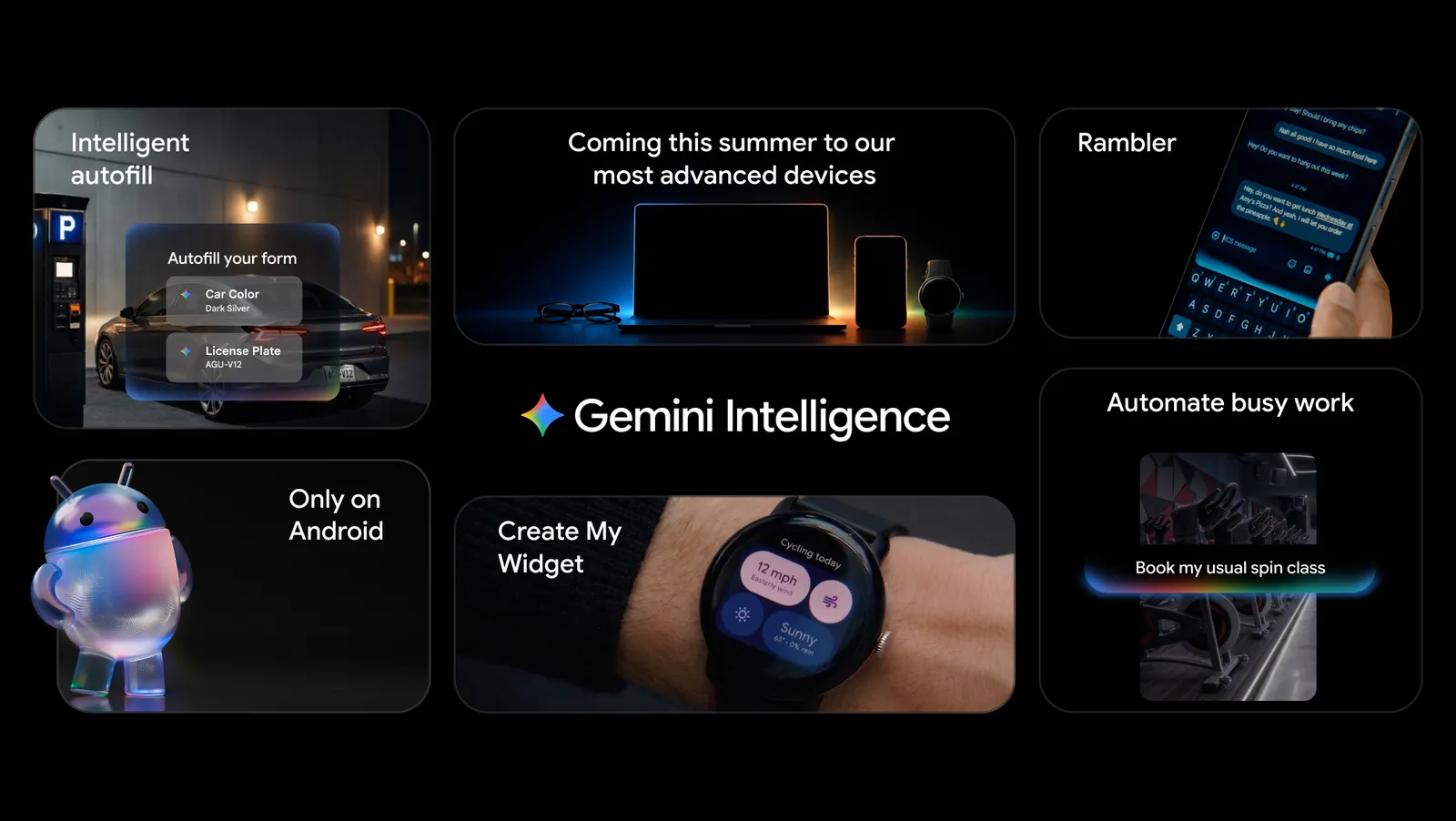
Examples demonstrated included the following:
- Finding available spots in fitness classes automatically
- Booking travel experiences based on an image
- Completing lengthy forms on mobile devices
- Delivering more relevant contextual assistance
Rambler makes voice input more natural
Google unveiled Rambler, a speech-to-text enhancement to improve voice interactions with Gemini.
The tool can automatically remove filler words such as “um” and “like” to create cleaner prompts, which users can speak without maintaining a robotic or overly structured voice.
According to Google, Rambler can still maintain the conversation in any number of different languages with reasonable competency, even when users habitually switch from one language to another in the same sentence.
AI widgets with ‘Create My Widget’
Another new addition from Gemini, Create My Widget, seeks to make Android customization uncomplicated.
Instead of building widgets manually, users may describe what they want in natural language, which Gemini, in turn, will use to produce a personalized widget.
If the feature works smoothly in real life, it could make Android customization much more accessible.
Pause Point targets digital distractions
Google also introduced Pause Points, a feature in digital well-being that helps users cut down on the use of distracting apps.
When users open selected apps, Android will pause their access for 10 seconds, in which an opportunity is given a moment’s consideration.
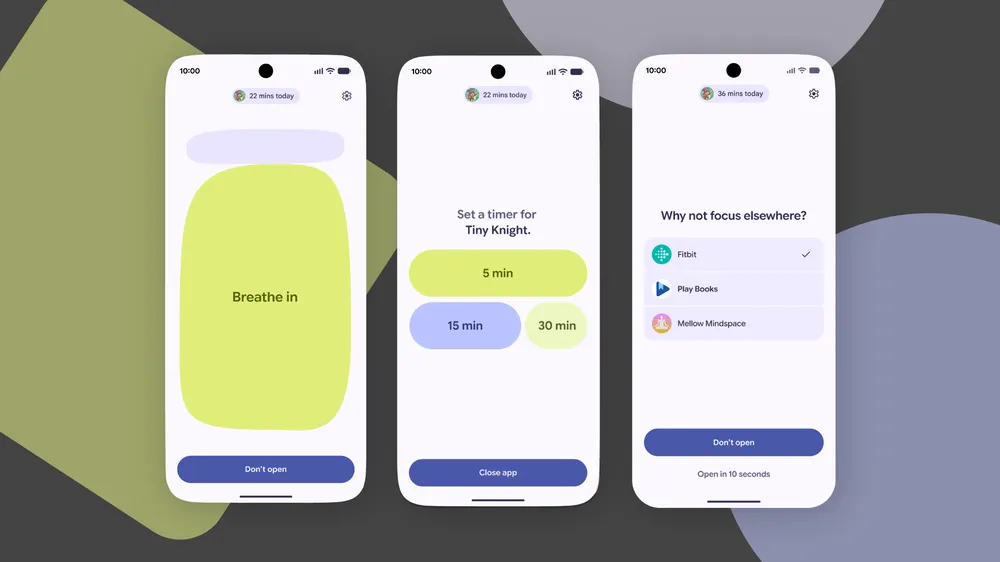
The system can also recommend alternative apps that may be more productive.
This is a simple feature but quite useful for those individuals who want some control over their screen time.
Keep up with the tech that actually matters.
Add us as a preferred source on Google Search for quicker access to our coverage.
New tools for Android creators
Google also announced several features for content creators.
Screen reactions
Pixel devices will receive Screen Reacts, a self-inclusive feature that records both the user’s face and on-screen activity at the same time.
The feature enables users to create reaction videos and tutorials with a simplified video creation process because it removes the requirement for multiple editing procedures.
Instagram enhancements
Google highlighted upcoming Instagram improvements for newer Android devices, including the following:
- Ultra HDR content capture and playback
- Built-in video stabilization
- Better editing workflows
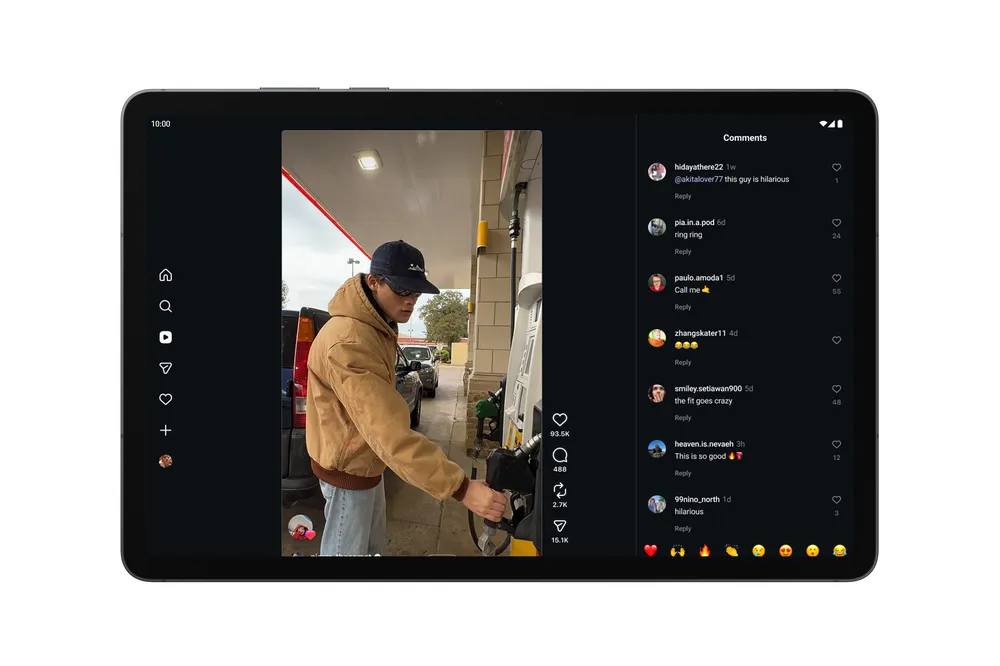
Instagram editing tools on Android will get AI enhancements like video upscaling and background sound isolation.
Adobe Premiere arrives on Android
Adobe Premiere is adding its versatile editing software to the Android user’s community later this year, with such editing tools developed explicitly for short-form video creators to help them produce YouTube Shorts templates.
Gemini integration expands in Chrome for Android
Chrome on Android is also receiving more comprehensive Gemini integration.
The new system provides three new features that allow users to create webpage summaries, generate images through AI, and receive help with activities that require them to locate parking spaces needed for their upcoming events.
Being proactive AI, Chrome becomes a unique system, an idea currently held by Google behind it.
Editor’s remarks
The Android Show: I/O Edition gave us a clearer picture of where Google is heading in 2026.
The company is currently implementing Gemini throughout its complete ecosystem, which includes phones and browsers and cars and upcoming hardware, instead of making separate feature upgrades.
The particular announcements did not bring anything groundbreaking, but their overall message showed that Google wants to implement AI technology as an invisible yet functional component in all digital user interactions.
With Google I/O 2026 just days away, even larger AI-focused announcements are likely still to come.