- Google will begin expanding Android developer verification globally from January 2027.
- The changes could affect how users install apps downloaded outside Google Play.
- Android users will still have a way to install unverified apps, but the process may change.
Google will expand its Android developer verification system globally starting in January 2027. With the introduction, the company brings new requirements for app developers distributing apps on certified Android devices. The change will gradually extend verification protections to all countries and installation sources, potentially affecting users who download apps outside official app stores.
The company announced the global rollout on November 19, 2026, following the initial implementation of the system in select regions. Google says the initiative aims to improve security by making it harder for malicious developers to distribute harmful apps while maintaining options for users who want to install apps from outside official app stores.
Android Developer Verification will expand globally in 2027
Google’s global rollout will begin in January 2027 in partnership with seven app distributors: Google Play, Samsung Galaxy Store, HONOR, OPPO, Xiaomi, Transsion, and vivo. The company plans to gradually extend the protections to all countries and installation sources over the following months.
The requirements will apply to certified Android devices, with Google working alongside app distribution platforms and developers to prepare for the expansion. The initial phase of the system began on September 30, 2026, in Brazil, Indonesia, Singapore, and Thailand.
Google introduced developer verification to strengthen accountability across the Android ecosystem and make it more difficult for malicious attackers to repeatedly distribute harmful apps under anonymous identities.
What is Android Developer Verification?
Android developer verification requires developers to verify their identity and register their apps before users can install those apps on affected certified Android devices.

The system will help users identify apps related to verified developers. Google says this additional layer of security can help reduce malware, scams, and impersonation attempts, particularly involving apps distributed outside established app stores.
Developers who distribute apps through Google Play can use Play Console to manage registration requirements. Those distributing apps independently can use the Android Developer Console to verify their identity and register their apps.
Google says millions of apps have already been registered globally, representing more than 99% of Android app installations worldwide.
Will Android users still be able to install APKs?
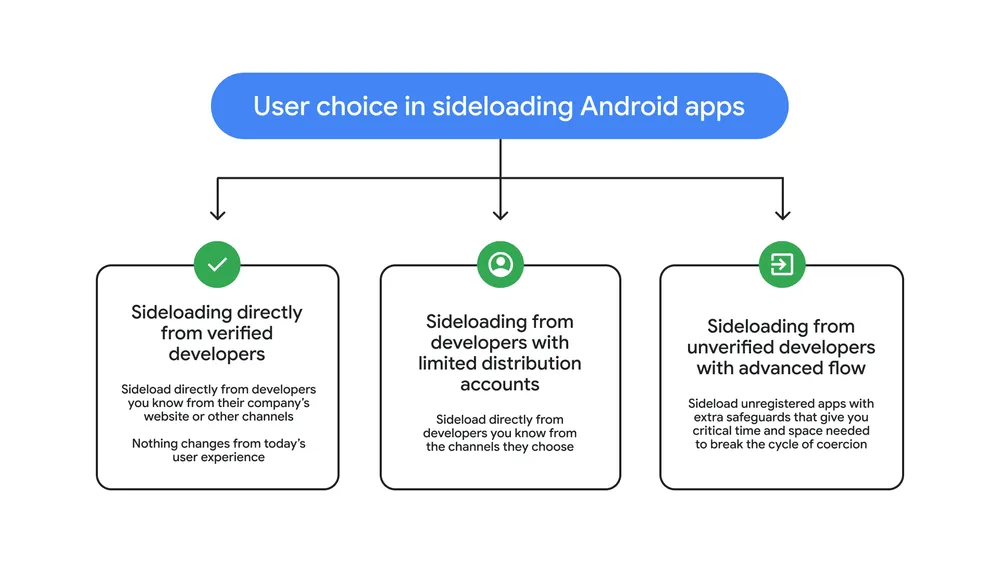
Android users will still have options to install apps outside Google Play. Google says developers can continue distributing apps through their preferred channels, including direct downloads and third-party app stores.
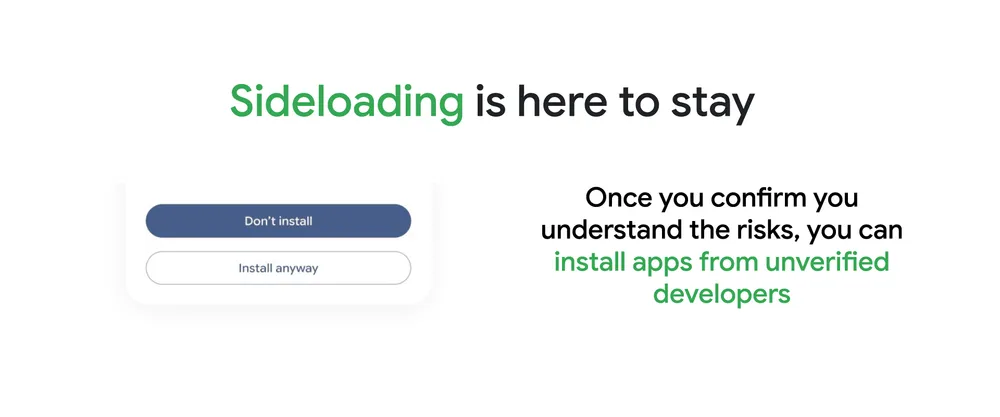
However, apps that are not registered with a verified developer may encounter additional restrictions when users attempt to install them on affected devices.
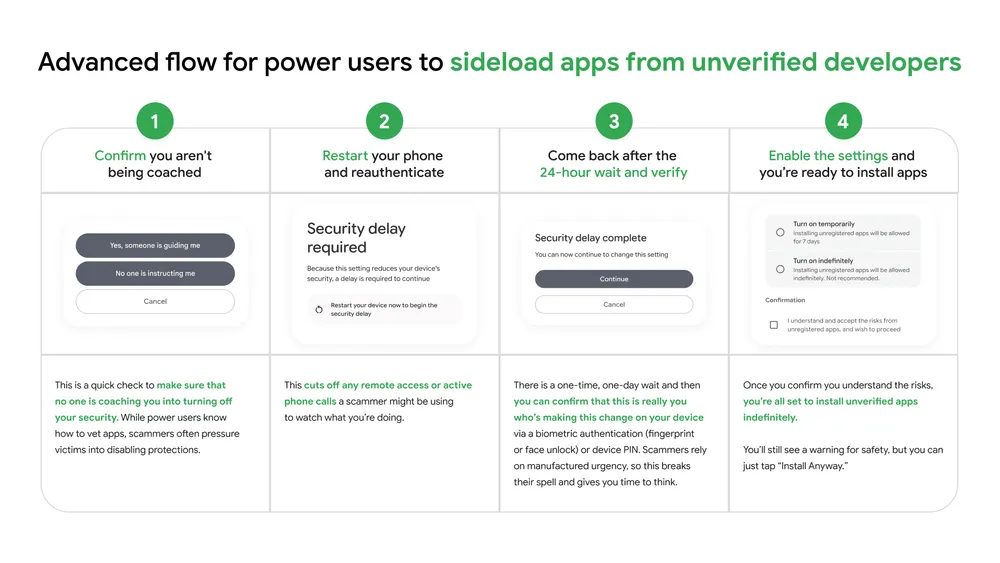
Google has also introduced an advanced installation flow for experienced users. It allows users to install unregistered apps after completing additional security steps designed to reduce risks associated with scams and fraudulent behavior.
The company says the advanced flow preserves flexibility for users who knowingly choose to install apps from unverified developers while maintaining safeguards for less experienced users.
Keep up with the tech that actually matters.
Add us as a preferred source on Google Search for quicker access to our coverage.