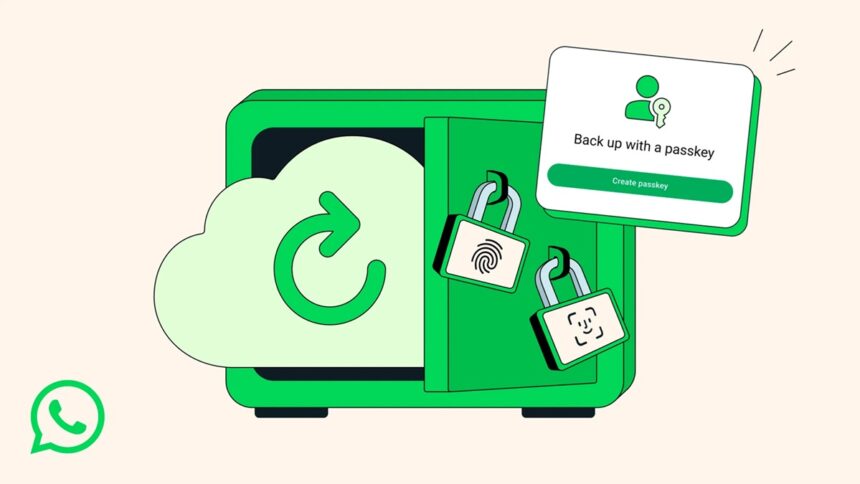
- WhatsApp now lets you encrypt WhatsApp backups using passkeys.
- The update eliminates the usual password and encryption keys that were causing resistance in accessing these files.
- The feature is still rolling out as we speak and thus, would take some time before reflecting on your device.
WhatsApp just added another security feature on-board. Now, you can encrypt WhatsApp backups using a passkey. This further strengthens WhatsApp’s security protocol as it offers exceptional instant messaging and VoIP features to more than three billion people on-board monthly. The number is huge considering there are only 8 billion people on the Earth.
WhatsApp passkey encryption for backups rolling out!
Developers at WhatsApp, the instant messaging app, have a tendency to bring new features with almost every update. The latest roll-out allows users to encrypt their chat backups with the same level of security that the personal and group chats offer, i.e., end-to-end encryption.

For the unversed, WhatsApp creates a backup file for all your chats every day, every week, or as programmed. This helps users recover chats in the event of a device switch or failure. However, for years, WhatsApp chat backups were simply lying on a user’s device (or email) with a bare minimum security protocol on them. Yes, you can secure a backup file using passcodes and PINs on your device or on the email; however, it doesn’t offer the same level of security as biometrics.

Cut to now, you can encrypt WhatsApp backups using biometric, i.e., face or fingerprint scan, and voila, you just upgraded the security on the backups quite significantly. It also eliminates the need to remember the passwords, for once, and the 64-digit encryption key that is usually required to access these backup files. A major upgrade over 2021’s feature to encrypt the backups using these long recovery keys in itself.
You can access the feature via Settings >> Chats >> Chat Backup >> End-to-end encrypted backup. Check if you have the option to use passkeys. If not, you might have to wait as the feature is gradually rolling out, and we have three billion active users to cover, so it would take some time.