Everything announced at Google I/O 2026

Aadil Raval
11 Min Read
Highlights
  • Google I/O 2026 wrapped up with more than 100 announcements and counting.
  • Google Gemini 3.5 Flash rolls out as one of the fastest and realistic model for content generation.
  • Google smart glasses in collab with Samsung is here to compete against Ray-Ban glasses.

Just last week, people were talking about The Android Show: I/O Edition 2026, and now Google I/O 2026 has become one of the swankiest developer conferences with more than 100 announcements.

The event was dominated by ‘AI’ and ‘agentic AI,’ including the newly launched Gemini 3.5 Flash, autonomous task handling by Gemini Spark, and beyond. With Google building a new agentic era, Google I/O 2026 announced a number of products and services, and here are all the major updates that you should know about.

Google launches Gemini 3.5 Flash

Google’s Gemini GenAI got the latest update, aka Gemini 3.5 Flash, which delivered intelligence on par with large flagship models within the Flash frontier series. The model outperforms Gemini 3.1 Pro, scoring benchmarks MCP Atlas (84.6%) and GDPval-AA (1656 Elo).
Google Gemini 3.5 Flash
Image Credits: The Keyword

Gemini 3.5 Flash will be a default model working under the Gemini app and AI Mode in Google Search. The model is significantly faster than previous iterations; it is better at handling agentic tasks and can output richer and interactive web UIs and graphics without trading for quality over latency. It is also less likely to generate harmful content.

The Gemini app has also received its share of redesign, which is dubbed “neural expressive”; it brings haptic feedback, better and popping colors, a new font, and new animations. 

Google Smart Glasses introduced in partnership with Samsung

Well, smart glasses from Google are here. Dubbed ‘intelligent eyewear,’ Gentle Monster, Warby Parker, Samsung, and Google joined forces to introduce the Android XR Glasses at Google I/O 2026. 

Compatible with Android and iOS devices, the smart glasses offer a built-in voice-based AI assistant powered by Google Gemini. The demo shows how these glasses were able to connect with the user’s phone to place an order for coffee and an event on Google Calendar.
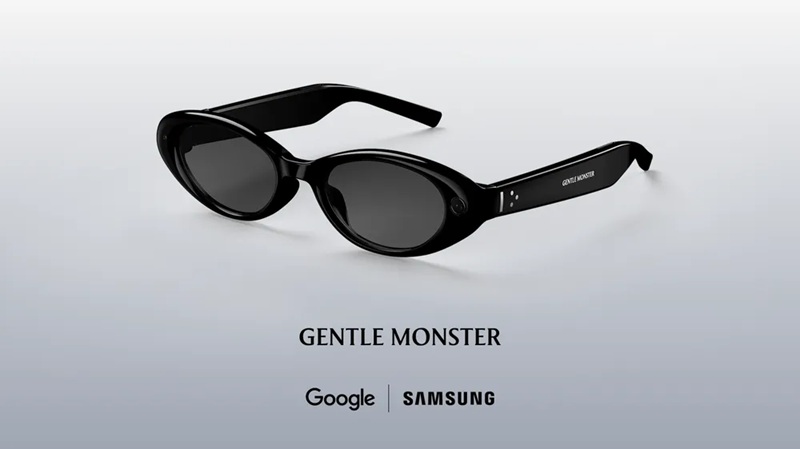
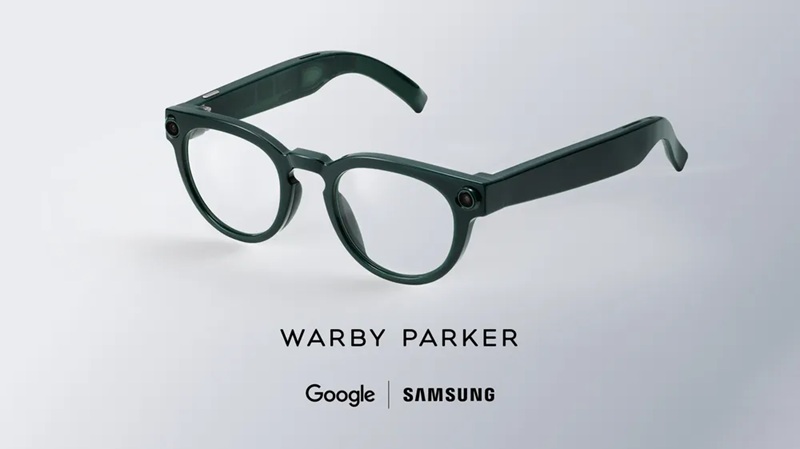
  • Google Smart Glasses
  • Google Smart Glasses 1

Other features baked into these glasses are real-time transactions with audio and managing everyday tasks thanks to their close-knit ties with Samsung and Google ecosystems. 

Apart from that, XReal made their public debut at Google I/O 2026, powered by a Snapdragon processor and a built-in display on its lenses. These OLED displays are capable of reaching a class-leading 70-degree FoV.

Google Spark arrives as an ambitious personal agentic AI

Call it one of the most ambitious products launched at Google I/O 2026, and you won’t be wrong. Gemini Spark is a 24/7 personal agentic AI that lets users get their space back from digital life as it controls everything on their behalf.
Google Gemini 2.0 Pro and Flash-Lite: Advancing AI with speed, efficiency, and safety
Image Credits: Google

Built on Google Antigravity IDE and powered by Gemini 3.5, the agent, as the name suggests, runs autonomously, should you choose to run it. With access to YouTube, Gmail, Docs, and 30+ third-party apps, the AI agent does all the tasks without much intervention.

It can even do transactions on its own, although for now, it requires your authentication before emptying your credit/debit card. You can also set where you spend, what it can buy, and whatnot. 

Cheaper Google AI subscription tiers

Surely great news for Google AI subscribers: the Palo Alto-based giant has reduced the pricing on its tiers. For instance, the AI Ultra (highest of ‘em all) is now priced at $99.99/mo, a much lower price tag than its previous $250 pricing. It comes with Gemini 3.5 Flash and 5x usage limits compared to Pro. 
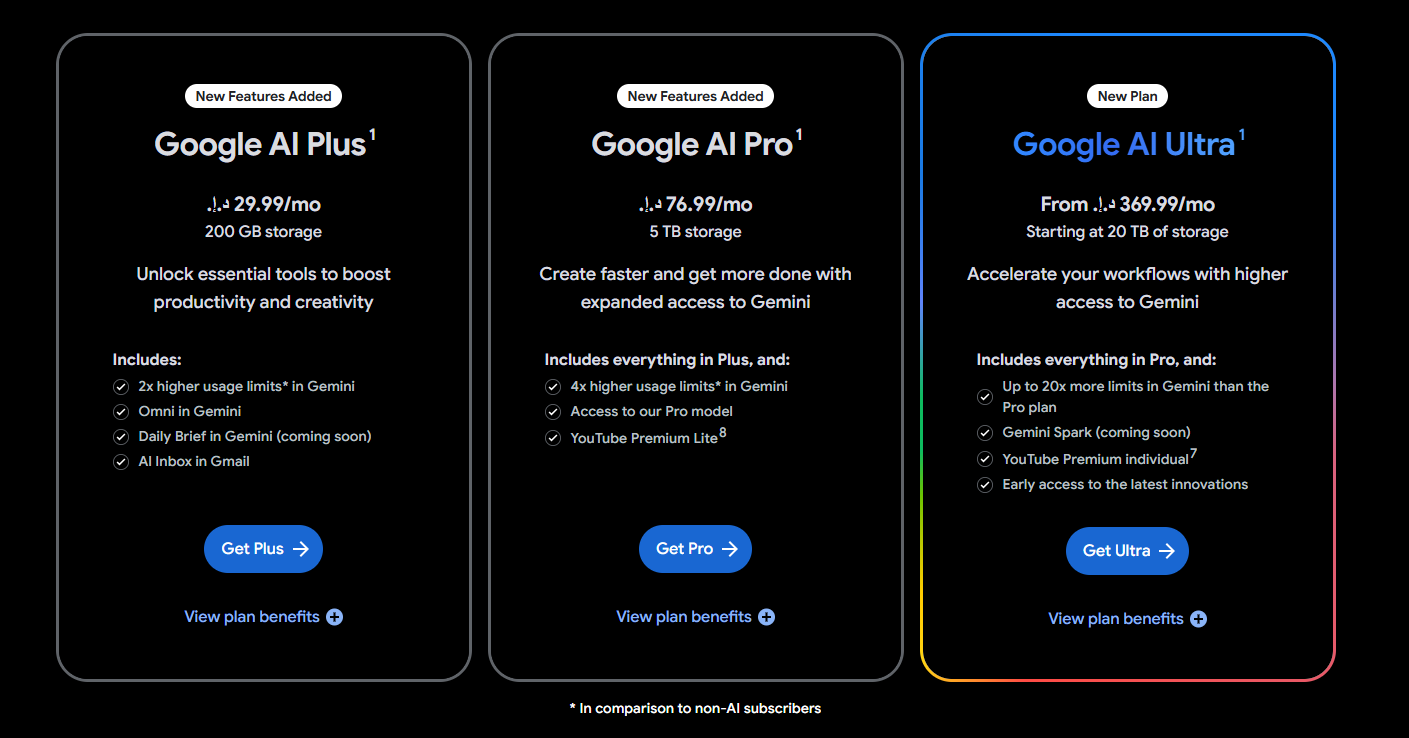
Google AI Subscriptions
Image Credits: Google One

The Google AI Pro subscription retails for $19.99/mo, while the lowest Google AI Plus retails for $7.99/mo with Gemini 3.5 Flash, AI Inbox, and the Gemini app with Omni and Google Flow, to name a few.

Additionally, Google will be accounting for compute power used while ditching the old per-prompt counting model, which means text generation is easy while a video task costs more to you. There are also limits that will be refreshed every five hours, and if you hit the upper limit, Google knocks you down to a light model instead of cutting your access to Gemini entirely.

Wear OS 7 goes official at I/O 2026

Alongside numerous announcements, one of the major highlights of the event was the introduction of Wear OS 7, which brings a major update that centers on battery efficiency, AI-powered features, and new tools for developers.
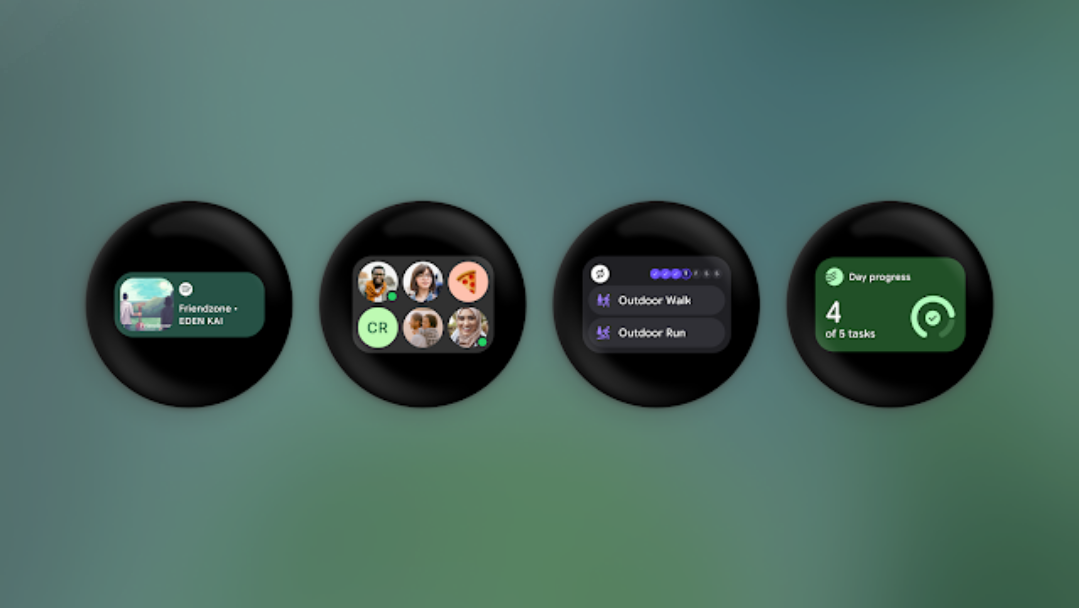
Google unveils Wear OS 7 with battery improvements, Gemini features, and new developer tools
Imag Credits: The Keyword

The update brings improvements to Wear OS device app development and user experience. Additionally, Google released the Android 17-based Wear OS 7 Canary Emulator to assist developers in testing future features and app compatibility.

To learn more in detail, you can check out our detailed article on Wear OS 7.

Google AI Search is now better

Google’s AI Mode as a feature recently crossed 1 billion monthly users and counting. It is one of the most powerful AI Search platforms, and now, it is powered by the latest Gemini 3.5 Flash that doubles down on its snappy and relevant responses. The intelligence search box is another addition reimagined with AI. It can now search for results using files, images, videos, and more, and not just text. 

Google Omni inches closer to AGI

Taking a step further in artificial general intelligence (or AGI), Google introduced Google Omni, a new world LLM model that offers multimodal input and output capabilities. It was introduced alongside Gemini 3.5 Flash and takes advantage of real-world knowledge to generate scientifically accurate content. It is available now with Google AI Plus, Pro, and Ultra subscriptions across the Gemini app and Google Flow. 

Video Credits: Google

Starting with video outputs at the moment, Gemini Omni will, in the future, expand to any input to any output. For instance, it won’t stick to the text-to-video output but rather let users choose whether they want video, image, audio, or other output for input of their choice. Videos generated with Omni arrive with a SynthID digital watermark that can be verified with Search, Gemini in Chrome, or the Gemini app. 

Gemini Omni for YouTube takes a step further

Gemini Omni Flash rolls out for YouTube as well. It is great for remixing and video editing, backed by Gemini Omni, including applying cinematic zooms, changing backgrounds, and more with a single prompt. Gemini Omni can be used with YouTube Shorts Remix, a much-needed upgrade, without paying anything extra.

Google Chrome is gaining an AI labelling detection feature

With the increase of AI-generated content, it has become more difficult to gauge whether the content you are consuming is AI-generated or not. Google Chrome and Search are gaining a feature to verify SynthID markers, which is an invisible digital watermarking system applied to content produced by Google AI models. 
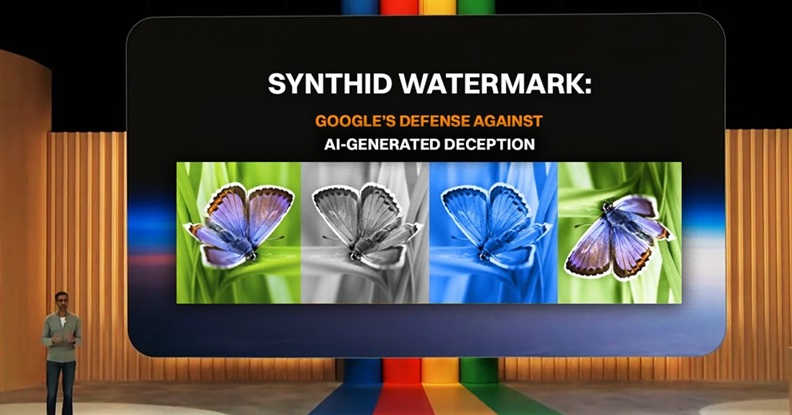
Google Chrome is gaining an AI labelling detection feature
Image Credits: Atlasiko

What this will do is let users check whether the image or video content they are consuming is AI-generated. Since it is coming to Chrome and Search, it will be widely available and thus offers a great outlook to never be misled by something that other users created using AI models. It also covers C2PA Content Creditors that detect if the content is original or modified using any tools whatsoever.  

A new “Neural Expressive” UI/UX for Gemini app

One of the major upgrades released for Gemini at Google I/O 2026 was a new design language dubbed “Neural Expressive.” It basically focuses more on fluid animations, new typography, a bunch of vibrant colors, and haptic feedback on the go. The redesigned UI/UX experience for the Gemini app is built from the ground up. 

Once you send a prompt, Neural Expressive swings into action, showing interactive elements such as images zooming in and out, information from different angles, timelines, embedded visuals, and more instead of a wall of text.

Google Pics lets you edit AI images in a jiffy

Another major update comes with Google Pics, an image editing tool based on Google Gemini and the latest Nano Banana model. The web app lets users prompt anything from a birthday party invite to infographics and more, with superior creative controls. It lets users edit specific portions of images instead of rewriting the entire prompt. Say you want to remove one cat on an image that has six cats; simply select the cat you want to remove, prompt it, and you’re done.

Video Credits: Google

Google Pics is now a part of what Google terms as ‘trusted testers.’ Soon, it will arrive on Google AI Pro and Ultra subscriptions as well. In fact, Google has plans to introduce Pics on Google Workspace to reach more users without letting them leave the participating Google Workspace whatsoever.

Keep up with the tech that actually matters.

From breaking news to deep dives, TrueTech brings you the tech stories worth knowing.
Add us as a preferred source on Google Search for quicker access to our coverage.
Add TrueTech as a preferred source on Google

Google Flow receives dedicated apps and an Omni upgrade

Google Flow received its share of updates for Google I/O 2026. It has dedicated mobile apps for Flow Music and Google Flow, alongside the web version. Powered by Google Omni, Flow will be able to blend real-world inspiration with AI-generated content.

Turns out there were more than 100 announcements made at Google I/O 2026, including those for developers.

You can watch the Google I/O 2026 event here:

Share This Article
Follow:
A wordsmith, a kin tech observer, a sci-fi fanatic and a scientific documentary buff.
Highlights
  • Google I/O 2026 wrapped up with more than 100 announcements and counting.
  • Google Gemini 3.5 Flash rolls out as one of the fastest and realistic model for content generation.
  • Google smart glasses in collab with Samsung is here to compete against Ray-Ban glasses.

Just last week, people were talking about The Android Show: I/O Edition 2026, and now Google I/O 2026 has become one of the swankiest developer conferences with more than 100 announcements.

The event was dominated by ‘AI’ and ‘agentic AI,’ including the newly launched Gemini 3.5 Flash, autonomous task handling by Gemini Spark, and beyond. With Google building a new agentic era, Google I/O 2026 announced a number of products and services, and here are all the major updates that you should know about.

Google launches Gemini 3.5 Flash

Google’s Gemini GenAI got the latest update, aka Gemini 3.5 Flash, which delivered intelligence on par with large flagship models within the Flash frontier series. The model outperforms Gemini 3.1 Pro, scoring benchmarks MCP Atlas (84.6%) and GDPval-AA (1656 Elo).

Google Gemini 3.5 Flash
Image Credits: The Keyword

Gemini 3.5 Flash will be a default model working under the Gemini app and AI Mode in Google Search. The model is significantly faster than previous iterations; it is better at handling agentic tasks and can output richer and interactive web UIs and graphics without trading for quality over latency. It is also less likely to generate harmful content.

The Gemini app has also received its share of redesign, which is dubbed “neural expressive”; it brings haptic feedback, better and popping colors, a new font, and new animations. 

Google Smart Glasses introduced in partnership with Samsung

Well, smart glasses from Google are here. Dubbed ‘intelligent eyewear,’ Gentle Monster, Warby Parker, Samsung, and Google joined forces to introduce the Android XR Glasses at Google I/O 2026. 

Compatible with Android and iOS devices, the smart glasses offer a built-in voice-based AI assistant powered by Google Gemini. The demo shows how these glasses were able to connect with the user’s phone to place an order for coffee and an event on Google Calendar.

  • Google Smart Glasses
  • Google Smart Glasses 1

Other features baked into these glasses are real-time transactions with audio and managing everyday tasks thanks to their close-knit ties with Samsung and Google ecosystems. 

Apart from that, XReal made their public debut at Google I/O 2026, powered by a Snapdragon processor and a built-in display on its lenses. These OLED displays are capable of reaching a class-leading 70-degree FoV.

Google Spark arrives as an ambitious personal agentic AI

Call it one of the most ambitious products launched at Google I/O 2026, and you won’t be wrong. Gemini Spark is a 24/7 personal agentic AI that lets users get their space back from digital life as it controls everything on their behalf.

Google Gemini 2.0 Pro and Flash-Lite: Advancing AI with speed, efficiency, and safety
Image Credits: Google

Built on Google Antigravity IDE and powered by Gemini 3.5, the agent, as the name suggests, runs autonomously, should you choose to run it. With access to YouTube, Gmail, Docs, and 30+ third-party apps, the AI agent does all the tasks without much intervention.

It can even do transactions on its own, although for now, it requires your authentication before emptying your credit/debit card. You can also set where you spend, what it can buy, and whatnot. 

Cheaper Google AI subscription tiers

Surely great news for Google AI subscribers: the Palo Alto-based giant has reduced the pricing on its tiers. For instance, the AI Ultra (highest of ‘em all) is now priced at $99.99/mo, a much lower price tag than its previous $250 pricing. It comes with Gemini 3.5 Flash and 5x usage limits compared to Pro. 

Google AI Subscriptions
Image Credits: Google One

The Google AI Pro subscription retails for $19.99/mo, while the lowest Google AI Plus retails for $7.99/mo with Gemini 3.5 Flash, AI Inbox, and the Gemini app with Omni and Google Flow, to name a few.

Additionally, Google will be accounting for compute power used while ditching the old per-prompt counting model, which means text generation is easy while a video task costs more to you. There are also limits that will be refreshed every five hours, and if you hit the upper limit, Google knocks you down to a light model instead of cutting your access to Gemini entirely.

Wear OS 7 goes official at I/O 2026

Alongside numerous announcements, one of the major highlights of the event was the introduction of Wear OS 7, which brings a major update that centers on battery efficiency, AI-powered features, and new tools for developers.

Google unveils Wear OS 7 with battery improvements, Gemini features, and new developer tools
Imag Credits: The Keyword

The update brings improvements to Wear OS device app development and user experience. Additionally, Google released the Android 17-based Wear OS 7 Canary Emulator to assist developers in testing future features and app compatibility.

To learn more in detail, you can check out our detailed article on Wear OS 7.

Google AI Search is now better

Google’s AI Mode as a feature recently crossed 1 billion monthly users and counting. It is one of the most powerful AI Search platforms, and now, it is powered by the latest Gemini 3.5 Flash that doubles down on its snappy and relevant responses. The intelligence search box is another addition reimagined with AI. It can now search for results using files, images, videos, and more, and not just text. 

Google Omni inches closer to AGI

Taking a step further in artificial general intelligence (or AGI), Google introduced Google Omni, a new world LLM model that offers multimodal input and output capabilities. It was introduced alongside Gemini 3.5 Flash and takes advantage of real-world knowledge to generate scientifically accurate content. It is available now with Google AI Plus, Pro, and Ultra subscriptions across the Gemini app and Google Flow. 

Video Credits: Google

Starting with video outputs at the moment, Gemini Omni will, in the future, expand to any input to any output. For instance, it won’t stick to the text-to-video output but rather let users choose whether they want video, image, audio, or other output for input of their choice. Videos generated with Omni arrive with a SynthID digital watermark that can be verified with Search, Gemini in Chrome, or the Gemini app. 

Gemini Omni for YouTube takes a step further

Gemini Omni Flash rolls out for YouTube as well. It is great for remixing and video editing, backed by Gemini Omni, including applying cinematic zooms, changing backgrounds, and more with a single prompt. Gemini Omni can be used with YouTube Shorts Remix, a much-needed upgrade, without paying anything extra.

Google Chrome is gaining an AI labelling detection feature

With the increase of AI-generated content, it has become more difficult to gauge whether the content you are consuming is AI-generated or not. Google Chrome and Search are gaining a feature to verify SynthID markers, which is an invisible digital watermarking system applied to content produced by Google AI models. 

Google Chrome is gaining an AI labelling detection feature
Image Credits: Atlasiko

What this will do is let users check whether the image or video content they are consuming is AI-generated. Since it is coming to Chrome and Search, it will be widely available and thus offers a great outlook to never be misled by something that other users created using AI models. It also covers C2PA Content Creditors that detect if the content is original or modified using any tools whatsoever.  

A new “Neural Expressive” UI/UX for Gemini app

One of the major upgrades released for Gemini at Google I/O 2026 was a new design language dubbed “Neural Expressive.” It basically focuses more on fluid animations, new typography, a bunch of vibrant colors, and haptic feedback on the go. The redesigned UI/UX experience for the Gemini app is built from the ground up. 

Once you send a prompt, Neural Expressive swings into action, showing interactive elements such as images zooming in and out, information from different angles, timelines, embedded visuals, and more instead of a wall of text.

Google Pics lets you edit AI images in a jiffy

Another major update comes with Google Pics, an image editing tool based on Google Gemini and the latest Nano Banana model. The web app lets users prompt anything from a birthday party invite to infographics and more, with superior creative controls. It lets users edit specific portions of images instead of rewriting the entire prompt. Say you want to remove one cat on an image that has six cats; simply select the cat you want to remove, prompt it, and you’re done.

Video Credits: Google

Google Pics is now a part of what Google terms as ‘trusted testers.’ Soon, it will arrive on Google AI Pro and Ultra subscriptions as well. In fact, Google has plans to introduce Pics on Google Workspace to reach more users without letting them leave the participating Google Workspace whatsoever.

Keep up with the tech that actually matters.

From breaking news to deep dives, TrueTech brings you the tech stories worth knowing.
Add us as a preferred source on Google Search for quicker access to our coverage.

Add TrueTech as a preferred source on Google

Google Flow receives dedicated apps and an Omni upgrade

Google Flow received its share of updates for Google I/O 2026. It has dedicated mobile apps for Flow Music and Google Flow, alongside the web version. Powered by Google Omni, Flow will be able to blend real-world inspiration with AI-generated content.

Turns out there were more than 100 announcements made at Google I/O 2026, including those for developers.

You can watch the Google I/O 2026 event here:
Share This Article
Follow:
A wordsmith, a kin tech observer, a sci-fi fanatic and a scientific documentary buff.