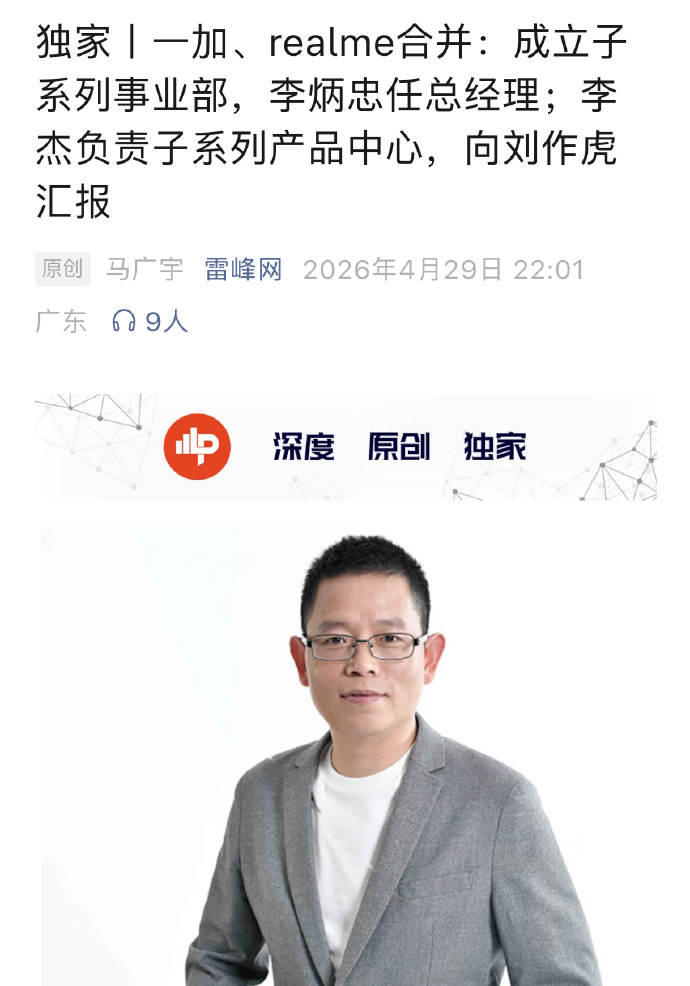
- OnePlus and Realme merged their global and domestic teams into a shared “sub-product center.”
- The restructuring puts Li Jie in charge under Pete Lau, while combining marketing and support teams.
- For users, this could mean better after-sales service, more consistent software between OxygenOS and Realme UI.
For the past few months, rumors around OnePlus possibly shutting down have been circulating widely online. The OnePlus and Realme merge operations news now clarifies what is actually happening behind the scenes. The company had earlier denied shutdown claims, but speculation continued due to leadership changes and reduced activity in some global markets.
Now, the situation is much clearer. Instead of shutting down, OnePlus is restructuring internally, and it’s doing so alongside Realme.
OnePlus and Realme merge operations under a new setup
According to well-known tipster Digital Chat Station, both brands have combined their domestic and global teams into what is being called a “sub-product center.” Earlier, OnePlus and Realme operated under BBK Electronics but largely worked as separate competitors.
That approach is now changing. The two brands are no longer functioning in isolation. Instead, they are sharing engineering resources, supply chains, and product planning teams. The idea is simple: reduce duplication and work smarter.
This new structure is being led by Li Jie, who reports directly to Pete Lau. Supporting him is Wang Wei, who has taken on the role of deputy general manager.
Integration extends beyond product development
This isn’t just an internal shuffle for product teams. The changes also extend to business operations. Marketing and customer service functions are now being handled together instead of separately.
Li Bingzhong is overseeing customer service and overall business operations, while Xu Qi is managing marketing.
Bringing these teams together could help both brands present a more consistent experience, especially in after-sales support and communication.

Efficiency gains could drive faster product cycles
One of the biggest advantages of this move is efficiency. By sharing resources, OnePlus and Realme can cut down on repeated work and reduce operational costs.
This could lead to faster product development cycles and smoother production processes. For users, that might mean quicker launches, better availability, and potentially improved service support thanks to shared infrastructure.
What happens to software and brand identity?
A big question many users have is about software. While OnePlus’ OxygenOS and Realme UI are expected to remain separate, some overlap in features and performance tuning is likely over time.
As for brand identity, the current direction still keeps things distinct. OnePlus is expected to continue focusing on premium devices, while Realme will stick to the budget and mid-range segments where it already has strong footing.
Keep up with the tech that actually matters.
Add us as a preferred source on Google Search for quicker access to our coverage.

So yeah, the OnePlus and Realme merge is less about merging identities and more about improving how both companies operate behind the scenes. While there may be some overlap in the future, the goal appears to be clearer positioning and stronger execution.
Some people may feel both brands could lose their identity. That might happen a little. But at the same time, this move can also bring better products overall. Let’s see how it goes.